The 2026 FIFA World Cup, the biggest edition yet, will be remembered for its firsts. The first tournament to expand to 48 teams. The first hosted by three countries. The first final to pair the top two ranked teams in the official FIFA World Rankings. And more.
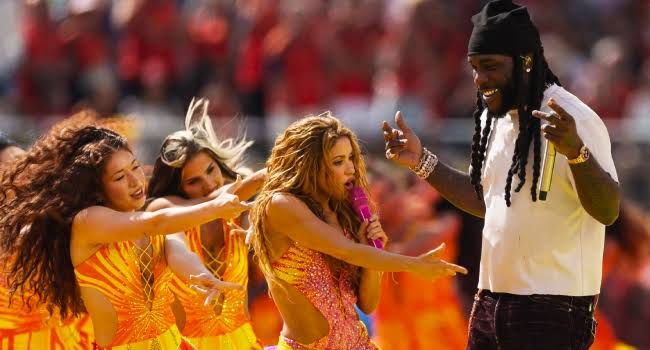
Most relevant to us, though, is that this was the first World Cup with a halftime show at all. The final at New York New Jersey Stadium in East Rutherford featured an 11-minute showcase with performances from Madonna, BTS, Justin Bieber, Shakira & Burna Boy, and Gustavo Dudamel. It said as much about FIFA’s commercial ambitions as it did about the institution’s evolving relationship with music, more on this later. Of every song performed that night, only Shakira and Burna Boy’s “Dai Dai” was an official FIFA song, part of the 2026 soundtrack album. Burna Boy himself called the moment “a privilege and a responsibility that I don’t take lightly,” a nod to representing Africa on a stage FIFA had never built before.
That song has become the most chart-dominant anthem the tournament has ever produced.
It hit number one on the Billboard Global Excl. U.S. chart, the first official World Cup song to top that ranking since it launched in 2020. It went on to become the first World Cup song in history to top both major Billboard global charts at once, the Global 200 and the Global Excl. U.S. For Burna Boy, it marked his first ever Global 200 number one, and made him only the second Nigerian artist ever to reach the summit of the Global Excl. U.S. chart. The song hit number one on Spotify globally, and its video has passed 400 million views on YouTube.
None of that makes “Dai Dai” the best selling World Cup song of all time. Shakira already holds that record herself. “Waka Waka,” her 2010 anthem, is still the most streamed World Cup song on Spotify, having crossed a billion streams by January 2025. What “Dai Dai” did instead was something no World Cup song had managed before it: dominate the charts completely, in a way built almost entirely on the strength of an Afrobeats artist sharing the mic with a global pop icon.
That distinction matters, because it is not a coincidence. It is the result of a mechanism FIFA has been quietly building for over twenty years.
How FIFA Used to Do This
Music has been a part of the World Cup ever since its debut in 1930. Back then, it was associated with local musicians from a host country, or even the national team itself. Chile had its own rockabilly hit in 1962 while England had its own mascot song in 1966. But none of it carried FIFA’s official backing; it was whatever the host nation put together on its own.
That changed in 1990. “Un’estate italiana,” performed by Edoardo Bennato and Gianna Nannini for Italy’s World Cup, became the first song to carry FIFA’s official song designation. This was the moment music at the World Cup stopped being a local tradition and became a sanctioned, global product. Four years later, FIFA went a step further: Gloryland: World Cup USA 94 was the first-ever official World Cup body of musical work, expanding the idea from a single song into a full compilation built for a global audience.
This development also coincided with the beginning of a system that will define the commercial infrastructure of FIFA till date. International Sports and Leisure (ISL), a sports marketing company founded in 1982 by Adidas heir Horst Dassler, bought FIFA’s overarching television and marketing rights packages for fractional prices, then bundled them to sell to corporate partners like Coca-Cola and Adidas. This also transferred into the music business. As UEFA senior executive Guy-Laurent Epstein puts it, “ISL was the owner of the rights.” Guy, who worked at Sony Music around the 1998 World Cup further explained, “Sony Music became the licensing agent for ISL, offering a minimum guarantee plus royalties.”
At this time, FIFA did not manage its intellectual property having sold those rights to ISL. Then ISL ‘hired’ Sony Music as their specialized music partner. It granted Sony the exclusive right to use the official World Cup logos, trademarks, and branding to curate the 1998 album Allez! Ola! Olé!, headlined by Ricky Martin’s “The Cup of Life,” a song that would go on to win a Grammy.
Sony Music (and its subsidiaries like Epic or RCA) distributed every official compilation from 1998-2014. When ISL collapsed in 2001, FIFA regained control of its rights and negotiated deals in-house. In 2007, FIFA signed a global partnership contract with Sony Corp., Sony Music’s parent company. The US$305 million deal ran from 2007-2014 allowing Sony to exercise various rights as an official sponsor of over 40 FIFA events, including the World Cup. The partnership extended across key sectors of the Sony group, including electronics, movies, music, and games.
Sony declined to renew the contract in 2014, reportedly over concerns that sponsorship costs would rise, a decision that landed as FIFA was also facing mounting controversy over its Russia and Qatar host selections for 2018 and 2022.
This left a gap in the music policy of the World Cup. In 2018, there was no official FIFA World Cup album for the first time in more than 20 years. There was an official song, “Live It Up” by Nicky Jam, Will Smith, and Era Istrefi, owned by Sony Music Latin. It was the smallest, least ambitious music moment the World Cup had produced since before Gloryland.
FIFA SOUND (2021 – DATE)
In 2021, FIFA announced the launch of FIFA Sound, an entertainment strategy designed to let soccer fans, music lovers, artists and players make connections through the sport and music. FIFA Sound is responsible for the music policy of FIFA events like FIFA World Cup™ Opening and Closing Ceremonies, FIFA Fan Festivals™ and The Best FIFA Football Awards™. It is also now the platform responsible for FIFA official soundtracks.
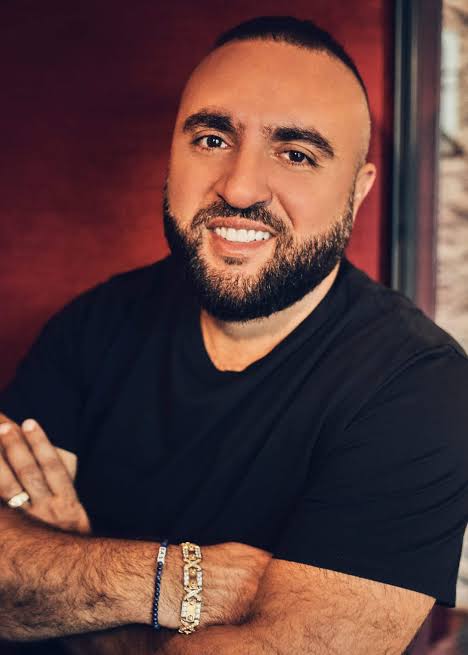
More Interestingly, FIFA Sound was launched in partnership with Universal Music Group (UMG). This means, all FIFA releases now come through UMG’s subsidiaries. The 2022 album was released under Universal Arabic Music, and the 2026 album under SALXCO. The Weeknd’s co-manager, Wassim Slaiby, appears to be the connecting dot between those two subsidiaries. Slaiby, who founded SALXCO in 2011, was named CEO and founder of Universal Arabic Music in 2021.
One major difference between this new setup and the old arrangement was that FIFA finally had an entity that could not only license songs, but also own them. Since 2022, FIFA official releases have had FIFA Sound credited as a primary artist. Licensed songs, like ‘Dai Dai’ & IShowSpeed’s ‘Champion’, do not credit FIFA Sound.
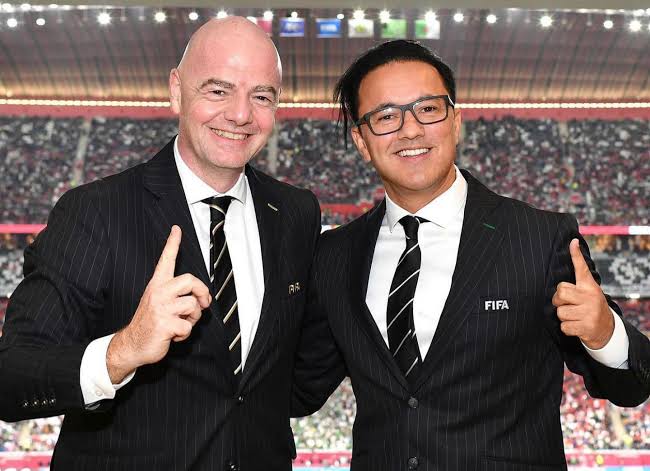
The internal connecting tissue to FIFA’s new music setup is Moroccan record producer, Nadir Khayat better known by his stage name, RedOne. Nadir has produced for high-profile recording artists including Lady Gaga, Jennifer Lopez, Enrique Iglesias, Pitbull, One Direction, Jung Kook, Kat Deluna, and Usher, among others. In 2021, RedOne was appointed FIFA’s executive director of entertainment and he has held the role since. He was executive producer of the FIFA World Cup Qatar 2022 Official Soundtrack but he has been working with FIFA since 2006. He was appointed as the main producer and songwriter for the Official 2006 FIFA World Cup Music Program. In 2014, He collaborated with global artists like Pitbull and Jennifer Lopez, contributing production and remix work surrounding the Official Album: One Love, One Rhythm. In his role as Creative Entertainment Executive, RedOne oversees tournament musical integration globally for FIFA, in addition to curating, producing and writing songs
How ‘Waka Waka’ & RedOne Opened The Door For Afrobeats.
FIFA Sound’s infrastructure explains how music gets made for the World Cup. But it doesn’t explain why, cycle after cycle, that infrastructure kept reaching for African artists specifically. For that, the story goes back to a single song, and a producer who says he saw something in it early.
In 2010, Shakira’s ‘Waka Waka (This Time for Africa)’ did more than become the biggest World Cup song of its era. According to NPR, it ushered in a shift toward Latin songs with more of an Afrobeats and Afrofusion influence, changing the sonic direction FIFA’s biggest moments would pull from for years afterward. Every official World Cup song since has followed that template. 2014’s “We Are One (Olé Ola)” paired Pitbull and Jennifer Lopez with Brazilian singer Claudia Leitte, an entirely Latin lineup. 2018’s “Live It Up” carried Nicky Jam. 2022’s official song was “Hayya Hayya (Better Together),” which brought in Davido, Afrobeats. And in 2026, “Dai Dai” closes the loop by pairing the same artist who opened the door, Shakira, with an Afrobeats artist again, Burna Boy, sixteen years later.
Qatar’s cycle also had a second major song, “Dreamers,” performed by Jung Kook at the opening ceremony, without a Latin or Afrobeats artist attached, but the official song designation belonged to “Hayya Hayya.”
This shift started over a decade before RedOne held any formal title at FIFA. By the time he was appointed executive director of entertainment, the door was already cracked open.
What RedOne brought was intent. “I had a vision and concept to write and produce the first-ever official soundtrack for the World Cup, collaborating with talent from both the region (Africa) and from around the world,” he said. That framing showed up in how he actually built the 2022 soundtrack. His pick of Davido for “Hayya Hayya” wasn’t also incidental. It was personal. “Davido is a friend and he is a huge star for us Africans,” he told The Africa Report. “He believes in the dream and when you see somebody from Africa making it big in the world, putting their stamp on history, it makes you proud.” RedOne has also been open about how long this has been the plan, not the outcome. Speaking about his early belief in African music’s trajectory, he said, “ I always believed that Africa would be the future, we manifested it in a way, and it took time, but slowly, slowly it was growing, and now it is taking over the world.“
RedOne’s bet on Africa wasn’t made in a vacuum. While FIFA Sound was being built out, Afrobeats was already in the middle of its own, entirely separate rise.
Afrobeats streams on Spotify grew 550% between 2017 and 2022. By 2023, the genre had been streamed more than 14 billion times on the platform in that year alone, with London and Paris ranking among its top listening cities globally. Spotify has since reported Afrobeats growing over 5,000% since 2021, with 22% year-over-year listener growth in 2025 alone, and expansion into markets with no prior connection to West African music: Indonesia, Egypt, India, and a 400% surge across Latin America.
The institutional recognition caught up fast, too. Burna Boy won a Grammy for “Twice As Tall.” Rema’s “Calm Down,” featuring Selena Gomez, became the first African artist-led track to cross a billion streams on Spotify. In 2024, the Recording Academy introduced a dedicated Best African Music Performance Grammy category, and by the 2026 ceremony, Burna Boy, Davido, Wizkid, Omah Lay, and Ayra Starr all received nominations in it, with Fela Kuti receiving the first Lifetime Achievement Award ever given to an African artist.
By the time FIFA Sound needed African artists for its 2026 tracklist, the pool wasn’t scarce, and it wasn’t a gamble. It was crowded with artists who had already proven their commercial weight everywhere else first. Of the eighteen songs on the official album, five carry an African or Afrobeats-rooted artist, more than any prior World Cup soundtrack has featured. Burna Boy anchors “Dai Dai” alongside Shakira. Rema appears on “Goals,” alongside LISA and Anitta. Tyla features on “Game Time,” alongside Future. Ayra Starr shows up on “Show Me,” alongside Latto. And Davido returns for 2026 on “No Place Like Home,” alongside Major Lazer and Nelly Furtado. Compare that to 2022’s soundtrack, where Davido’s “Hayya Hayya” was the lone African presence on the tracklist.
It is now left to see whether 2026 will be a new baseline or a peak. FIFA Sound isn’t going anywhere before 2030, and RedOne’s role isn’t either. Whether the African density keeps climbing from here depends less on FIFA than on whether Afrobeats keeps posting the same rate of growth and recognition it has over the last five years. “Dai Dai” is proof of what happens when infrastructure, timing, and a genre’s own momentum all land in the same cycle at once. The next World Cup will show whether that alignment was a moment, or the new normal.
Leave a Reply