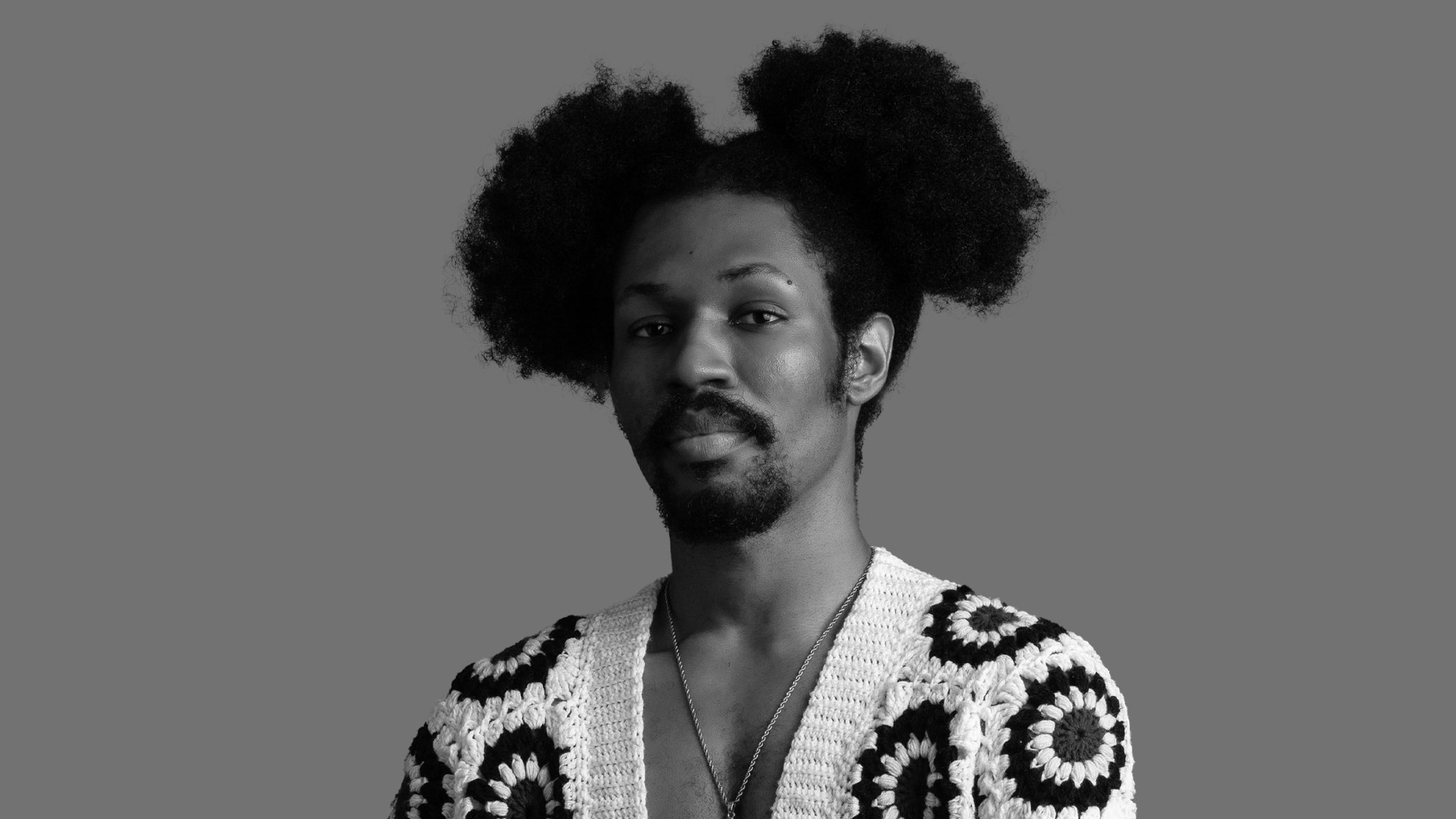
Ifeme C.S. does not fit neatly into one box, and he is not trying to. He is a filmmaker, music producer, DJ and event organiser, and the order in which those things happened matters. Film came first: music videos, commercials, photography, the whole visual world. Then lockdown happened, the shoots dried up, and with nothing but a laptop and time on his hands, he started making music. Not exactly planned, but definitely working out.
That accidental pivot produced a body of work that has since found its way into Nigerian film and a DJ career that has earned him a reputation as one of the most exciting names in Lagos’s Afro House scene. His event, Tamba, is now selling out venues with a capacity of up to 2,000 people. He has directed videos for Sarz, DJ Neptune and others. His record, Dancing Waters, introduced him to a wider audience and marked a turning point in how people understood what he was capable of.
What makes Ifeme interesting is not just the range but the way everything connects. His filmmaking brain shapes how he promotes his shows. His production instincts inform how he reads a room when he DJs. His DJ ear feeds back into how he makes records. It is all one ecosystem, built by a person who started by doing what he knew and kept saying yes to what came next.
He shared his story with us.
If you walked into a room and you were not allowed to say your name, who would you say you are?
I’m a superstar with plenty of star power.
How did you and music find each other?
As a human being living and existing in this world, you’re required to live with music. Music is an essential part of human existence. So as you’re born and growing up, you’re exposed to different forms of music. I found music by being alive.
Did you grow up in a household surrounded by music?
We don’t have any musicians in our family, but my dad plays a lot of music. He’s very open to exploring different sounds. So growing up, I used to hear a vast range of sounds.
You work in both film and music. Was that always the plan, or did you stumble into it?
I started with films, visual media, photography, music videos, and commercials. Music has always been there, but not in the sense that I wanted to create it; I was just shooting stuff for other people’s music. Then, during the lockdown, I was stuck inside. I couldn’t go out to film. I started playing video games at first, but I got bored. I said, “You know what, let me try making this music that artists keep sending to me.” And that’s how it started.
From visuals to music, and then you moved into organising an event. Tamba is now selling out venues with a capacity of up to 2,000. What made you start it?
When I first wanted to start DJing, a friend of mine with a venue said, ” You already know all these people from your other work. Just do events and invite them, and they will come because you’re likeable.” So I just started. It wasn’t necessarily about solving a problem. It was just me wanting to show the world that I’m doing this now. Come have fun with me.
Would you say there’s a particular person who has influenced your DJ style and identity?
Yosa. He’s one of the people who made me start DJing. I watched a set he played one time, and I was like, I can do this. I met him after the show and told him ‘bro, I want to start DJing’. He said, “first, get a controller.” I got a controller, and the rest is history.
As a producer, does your filmmaking brain step in to shape the way you make a track?
When you’re making a song, you already see what visuals you want to depict the project. But my filmmaking brain is not really in the making of the music itself, it’s in the promotion of the shows. I’ve shot videos for artists, I know what it takes to sell something, and most of what I’m doing these days is trying to sell shows. So I know exactly what content and visuals are needed to make people feel like they have to be there. So it’s more the marketing and promotional angle than the actual sound.
Can you describe the arc of a typical set? Do you have a structure you follow?
Yes. First, I want to know the kind of show; if it’s new, if it’s been running, what the organisers are going for. Because as a DJ, you are meant to make people have fun. As a producer or musician, you can make what you like, but once you perform live, you have to serve the best interests of the audience. So I try to blend what I really love with what I think the audience will love, so we all end up having fun together.
What’s the ratio? How much of the set is what you feel like playing versus what you think people want?
Earlier, it was more about what I liked. But now I can’t really say because the lines are blurring. I already know what people like, and I like it too.
What’s the most chaotic thing that has ever happened at Tamba that nobody noticed was happening?
The most chaotic thing — I can’t say that in this interview. It’s crazy. But the second most chaotic thing? Having issues with the venue. Let me just say that. I’ve also had gear issues. I was playing a show, and the speaker blew up and caught fire. I was laughing because it was funny. I had heard about it before in stories, but happening to me in real life, that was funny.
If you had to soundtrack a film using only your own production catalogue, which film would you pick?
Fun fact: my songs have already been in films. I have a song called Instagram Boy and it’s on Timini’s Real Love. So that’s the film.
You’ve directed videos for Sarz, DJ Neptune and others. How does directing for a major artist change the dynamic versus a smaller independent artist?
Most major artists in Nigeria are independent in one way or another, regardless of the labels supporting them. But with bigger artists, you have less freedom. There’s a brand already existing, and you have to follow their mood board, follow their direction. You’re servicing what already exists. With smaller artists, you can experiment more. There are no strict rules or guidelines.
‘Dancing Waters’ was a turning point for you. What was different about making that record?
It was the first time I worked with somebody who is already a proper musician. And she was active in the promotion of the project. People got to know me from it.
You’ve worked in visuals, music and raves. If you had to sacrifice one forever, which one goes?
Organising the rave. I don’t think I can do without music. And since film was kind of the door that opened everything, I think I’d be more sentimental about that too. But let the readers decide.
What is one track that has never left your DJ sets, no matter what the event is?
There’s a mashup I did of Where Have You Been. That track, man, I don’t know. When I was finishing it, I asked my friend, ‘bro, is this mad?’ He said ‘it’s just there.’ I said ‘bro, f*** you. Just there????’ I finished it, though, and it was mad. And since then, it’s always in my set.
If Tamba had a dress code that perfectly matched the vibe you want in the room, what would everyone be wearing?
All black. All black looking sexy. Look like vampires in the room. All black, skin glowing.
What version of you is the happiest in the moment: the filmmaker, the producer, the DJ or the organiser?
DJing first. On a good day, it’s not that intense compared to the others, where you have to actively make sure everything is going well. When you’re DJing, you’re just looking at people and smiling.
If someone could play you in a movie about your life, who would it be, and what genre would the film be?
Maybe my great-grandson. And the genre? Motivational. Take it, dream it, believe it, it shall happen.
If you could add one more skill to everything you already do, what would it be?
Dancing. That would be nice.
What would need to happen for you to feel like you’ve made it and there’s no going downhill from here?
Two things. First, I can decide to travel anywhere in the world and disappear for a month without feeling any financial burden. Second, I can no longer go out on the road without someone saying, “I know you from somewhere.”
Leave a Reply