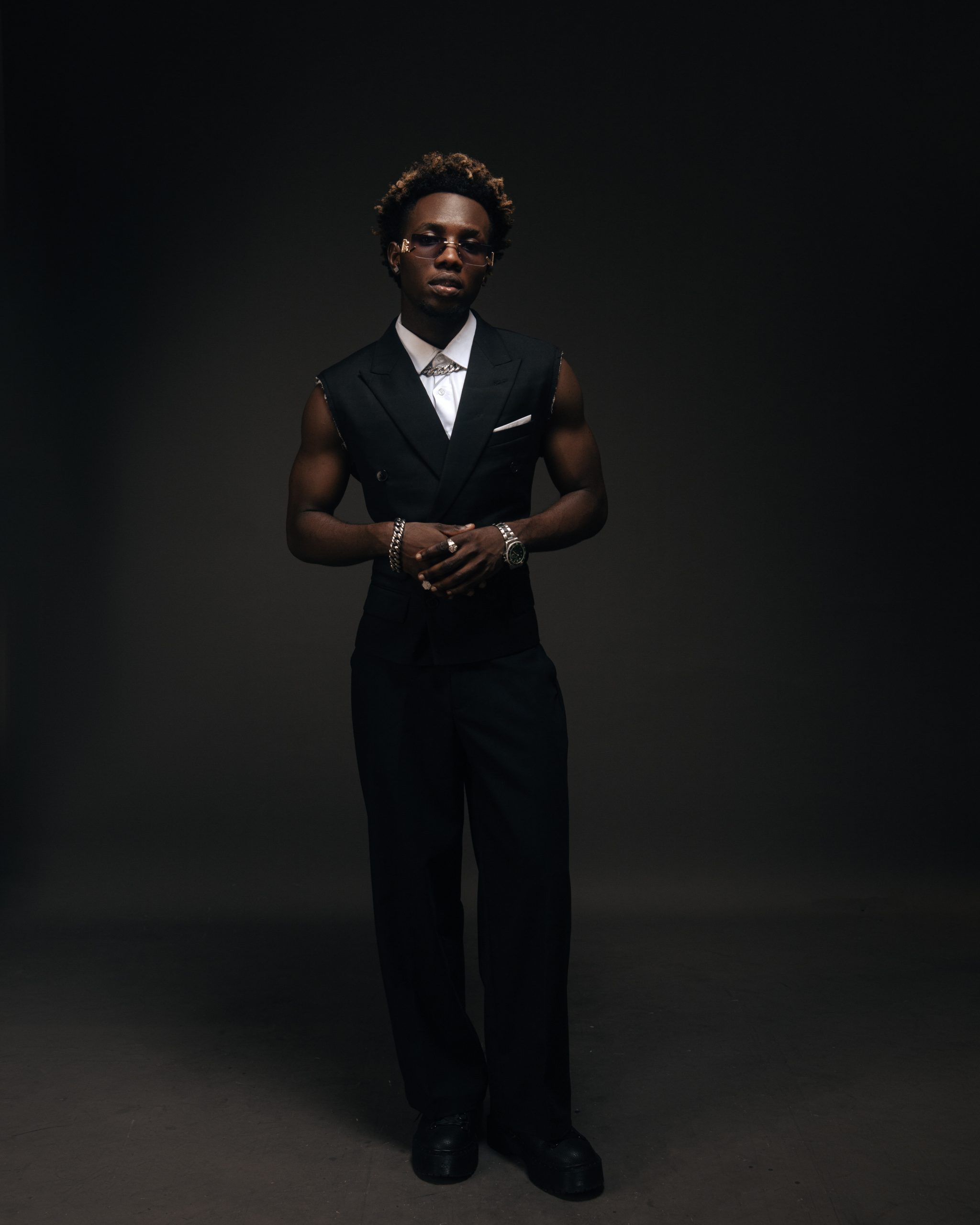
Davecash was singing before he knew it was something a person could do for a living. In primary school in Ajasa, Lagos, he would sing along to his friends’ desk beats and improvise over the melody of “Ralia the Sugar Girl,” a kid with no plan beyond the joy of it. Today, David Oladipupo has a debut EP, a run of competition stages behind him and a belief that his story is bigger than him.
The One, released under U-Records & Entertainment, is an eight-track project that moves between romantic Afrobeats and more reflective records. It follows attraction, faith and ambition alongside the quieter realities of chasing a dream: hunger, loneliness and the prayers of the people who believed before there was anything to show. The title, which he also reads as The Chosen One, is less a boast than a statement of purpose.His path there runs through a one-room apartment in Abeokuta, a performance video on Twitter that caught the attention of producer Niphkeys, and stages that include Next Afrobeats Star, where he finished First Runner-Up.
In this conversation with WeTalkSound, he talks about the kid from Ajasa, the grandparents who tried to shield him from the industry, and the voice note from his grandfather that anchors the EP’s opening track.
For readers meeting you for the first time, who is Davecash, and where does your story start?
Davecash is a Lagos-born Afrobeats singer and songwriter. My real name is David Oladipupo. I’m someone who believes deeply in purpose, faith and the power of dreams. My story started in Ajasa, long before I understood what being an artist meant. I was that kid who would sing over my friends’ desk beats in primary school. What started as something I enjoyed gradually became something I couldn’t see myself living without. Today, I’m still growing, still learning and still chasing something much bigger than where I started.
What’s the biggest difference between Davecash and David Oladipupo?
I think Davecash is the expression of David. Davecash is the artist people see on stage, in music videos and through the records I put out. David is the person behind all of that. He’s more private, more reflective and still figuring life out. But they share the same dreams, beliefs and values. I don’t think I have to become somebody else to be Davecash.
As a kid in primary school, you’d sing over your friends’ desk beats, even improvising on “Ralia the Sugar Girl.” What do you remember about that kid?
I remember a kid who genuinely enjoyed music without thinking about where it could take him. There was no pressure to make a career out of it or impress anybody. I just loved singing. My friends would create beats with their desks, and I would find myself singing over them, sometimes improvising. Looking back, I think that kid already had something in him that he hadn’t discovered yet. I wish I could tell him that one day, people would actually pay attention to the things he was doing for fun.
You recorded your first song in Basic 6 but didn’t release anything officially until SS1. What happened in between?
I was still discovering myself and learning what music meant to me. My grandparents were also protecting their grandson from real life, because they had seen what music had done to some of the artists from my hood. Some ended up taking drugs, running mad or losing their way. I was too young then, so it slowed things down, but looking back, I see it as my season of Adullam. I was growing, experimenting and trying to understand my sound. I didn’t have everything figured out, but the interest never went away. By SS1, I was ready to put something out officially, thanks to my maths teacher, who paid for my studio session.
You moved to Abeokuta for your OND at MAPOLY and lived in a one-room apartment with little industry support. What did that season teach you?
That season taught me resilience and how to believe in something even when there’s very little around you to encourage it. I was a student, living in a one-room apartment, trying to figure out music and still handle my education. There wasn’t much industry support, but I knew what I wanted. It taught me that your environment doesn’t necessarily have to determine how far your dreams can go. Sometimes, you have to keep moving before the opportunities begin to make sense.
While still a student, you secured a song with producer Niphkeys. How did that happen, and what did it feel like?
It happened through social media, actually. Niphkeys came across a performance video of mine on Twitter that my friend had posted, and that eventually opened the door for us to work together. At that point, I was still a student, trying to find my feet in the industry. So having someone of his calibre notice what I was doing meant a lot. It reminded me that you never really know who’s watching or where an opportunity can come from. That collaboration was a big moment for me.
Then Tunde Ednut shared your music online. What changed after that, and what didn’t?
Having Tunde Ednut share my music gave me access to a wider audience and put my name in front of people who might never have discovered me otherwise. It was a good feeling seeing more people pay attention to my work, but I lost that Instagram account. I believe everything happens for a reason. What didn’t change was the work itself. I still had to make good music, keep improving and find ways to sustain that attention. A repost can introduce you to people, but you still have to give them a reason to stay.
You’ve won AfroandThebeats, made the Headies MicCheck Top 12 and finished First Runner-Up on Next Afrobeats Star. Which of those taught you the most, and what did coming second teach you?
Every experience taught me something different, but Next Afrobeats Star was particularly significant because of the exposure, the competition and the people I got to meet along the way.
Coming second taught me that being close to something doesn’t mean your journey is over. Sometimes, you can give something your best and still not get the exact outcome you hoped for. But that doesn’t make the experience a failure. I learned to appreciate progress without losing sight of what I still want to achieve. I’m grateful for every platform because each one has contributed to the person and artist I’m becoming.
You write for other artists as well as yourself. How is giving away a song different from keeping it?
For me, songwriting is about storytelling and expression. When I’m writing for myself, I’m thinking about how the song connects to my personal experiences, my emotions and the story I want people to hear from me.
When I’m writing for another artist, I have to understand their personality, their sound and how they would interpret the song. You have to step outside yourself and create something that feels authentic to them. It’s a different creative experience, but I enjoy both. At the end of the day, a good song is a good song.
Your debut EP is called The One, or The Chosen One. Why that title, and is it hard to say out loud about yourself?
The One represents purpose, faith and my belief that there’s something bigger guiding my journey. I also describe it as The Chosen One. It’s not necessarily about saying I’m better than anybody else. It’s about understanding that everybody has a purpose and being intentional about walking in yours.
I’ve always believed that my story is bigger than me. That’s really the foundation of the title. I believe in myself, but I also understand that hard work, faith and grace have played major roles in getting me here. So no, I’m not afraid to say it. I just understand the responsibility that comes with believing it.
“Kumamba” is built around a voice note from your grandfather praying for you. If you’re comfortable sharing, what does that message mean to you now?
That voice note means a lot to me because it’s a reminder of the people and prayers behind my journey. Sometimes, when you’re chasing a dream, you become so focused on where you’re going that you forget the people who have been wishing you well from the beginning.
Having my grandfather’s actual voice and prayer on a record makes it very personal. It’s something I can always return to, regardless of how far I go. Beyond being a song, it’s a memory I’m preserving. I think there’s something special about being able to document a blessing like that.
“Okay” talks openly about hunger and loneliness. Why was it important to put that on a record people will dance to?
Because those experiences are part of my story too. Sometimes, people hear Afrobeats and automatically associate it with enjoyment, dancing and having a good time. But there’s usually another side to the person making the music.
I’ve experienced moments where things weren’t as comfortable as I wanted them to be, and there were times I had to deal with certain feelings on my own. I wanted those experiences to exist in my music too. I don’t think every song has to sound sad just because the story behind it isn’t necessarily happy. You can dance to a song and still connect deeply with what the artist is saying.
“Sade” continues a story you started with “Gbese” and looks at a woman beyond her looks. What do you think love songs usually get wrong or leave out?
I think a lot of love songs focus heavily on physical attraction, which is understandable, but there’s so much more to appreciating someone. There’s the way a woman thinks, how she carries herself, her intelligence, her dressing, her personality and the little things that make her different.
With “Sade,” I wanted to explore those qualities. Attraction can get your attention, but there’s more to a person than what you see. I think love songs become more interesting when they capture the different things that make someone special rather than relying on the usual compliments.
“Sare,” the last song you wrote in camp, feels like a gift to you. When you look back, how far have you really come?
“Sare” is one of those songs that feels like it was given to me by God. It’s a reminder that I’m not where I want to be yet, but I’m also not where I used to be.
When I look back at my journey, I see how many things have happened that the younger version of me could only dream about. From singing over classroom desk beats to working with established producers, performing on different platforms and releasing my debut EP, there’s been growth.
But I also know there’s still a long way to go. I’ve covered some kilometres, but there are many more ahead of me. That’s what “Sare” represents. Gratitude for the distance covered and hunger for everything still to come.
What’s your ideal audience?
My ideal audience is anybody who can find a piece of themselves in my music. I don’t want to make music that only speaks to one kind of person or one particular experience.
I want somebody to connect with the romantic side of me, somebody else to connect with the struggles, and another person to find motivation in the records about faith and ambition. I want my music to travel across different cultures, age groups and backgrounds. Ultimately, I want people to feel something when they listen to Davecash.
“Star” dreams of stages like Coachella. Picture that stage: what does it look like, and what’s the first thing you say into the mic?
I see a massive stage, thousands of people, flags from different countries and everybody singing my songs, even the ones they might not completely understand. I see a full production, an incredible band, dancers and an energy that makes people feel like they’re part of something bigger.
But beyond the size of the stage, what matters most to me is the connection with the audience. I want people to experience Afrobeats and African music on that scale and understand where the sound comes from.
The first thing I’d probably say is, “Ajasa is in the building tonight.” Because no matter how far the music takes me, I want people to remember where the journey started.
Leave a Reply