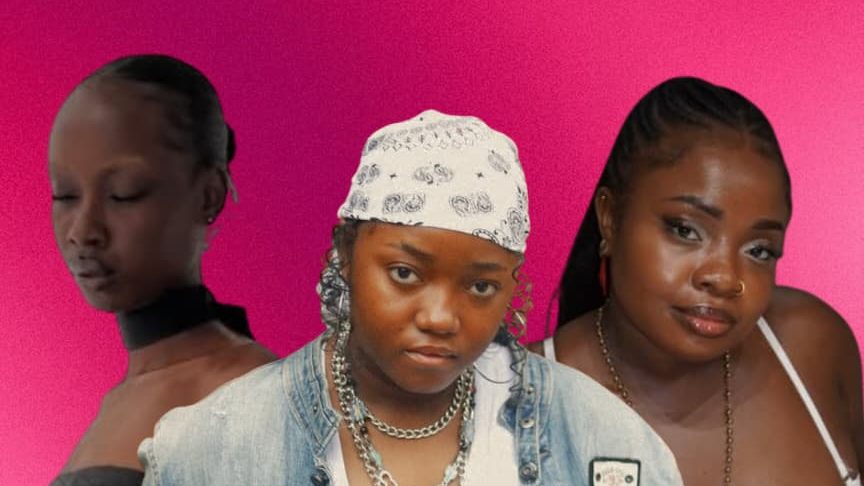
It might happen at a different time for each woman, but one thing is for sure: it happens for every woman. The moment where it suddenly becomes clear that the playing field is NOT level. For International Women’s Day, we asked women a simple, yet loaded, question: What was that moment for you? When did you realise the world would not work for you the same way it does for men? What was the event that took your rose-coloured glasses off? When did you realise you’d always have to fight your way through?
What radicalised you?
These are their responses.
The Beginning: Childhood
- Every little mistake growing up was met with “Is this how you’ll behave in your husband’s house?” I was taught that a woman must endure, keep the peace, and carry pain quietly. Reading Purple Hibiscus later, hearing stories of women staying in unfair marriages for the sake of the children, made it undeniable. The world expects women to shrink and suffer silently.
- Primary 5. I wanted to join the band, already bought my sticks, excited. The bandmaster said girls weren’t allowed. Then watched them go beg boys to join. That’s when I realised if I wanted something, I had to fight a system built for men, competing with boys who had no idea they were even in a race.
- As a child, constantly hearing people asking when my parents would have a son, and calling my dad “weak” for having 4 daughters.
- My father made me feel like I wasn’t important from childhood. The usual African misogyny. It made me want to constantly prove I was worthy. I ended up performing better than my brothers in school.
- Probably the fact that as a child, each time I mentioned I wanted to be a doctor, everyone would say “Oh, you can be a Gynaecologist and help womenfolk.” I felt boxed in before I could make my own choices.
- Watching my mum fight for a happiness that never existed, then noticing the same pattern in other women. I was 7.
- Growing up, I noticed the subtle differences in how people spoke to me versus my brothers, how they easily got away with some actions, and I didn’t. The expectations placed on me and the way my opinions were received… it all added up.
- I think I always knew deep down the world wasn’t equal. I watched my mum bend her back for a man who clearly didn’t love her, constantly maltreated, but because she looked good, people assumed she had a good husband. I watched her female friends rush to the kitchen while their husbands sat waiting to be served, not even getting up to wash their own hands. I was always subconsciously radical, but I had such a warped idea of what feminism meant that I unintentionally enabled the patriarchy in small ways. Until I realised that feminism was never the problem. Being beneath a man was.
- When I was made to work harder by doing all the house chores because I was the only daughter. I was also expected to ace all my exams, while my brothers never got scolded for their performance
The System: School & Work
- I’d been topping my Catechism class, the gap between me and the next best was always “unholy.” So when they needed a class rep, it should’ve been me. It wasn’t. They picked a boy who didn’t even use to pass, because “a girl cannot be our class captain o.” They made me assistant. I rejected it, got hit with emotional blackmail and “do it for God,” and eventually agreed. I went home and cried. That moment was when it clicked. If this could happen in church, where we’re all equal in God’s eyes, why would I expect the rest of the world to do better?
- During my IT placement as a uni student, my male colleague was invited to sit at a desk in the air-conditioned office while the rest of us shared plastic chairs two-to-one in the heat. They told us to our faces that it was because he was “the man.”
- A guy looking for a business partner discredited me on the spot. Asked if I’d have time to run operations because I’m a woman, then asked if I was married. He was young. That was the shocking part.
- Gender based bullying in secondary school, and reading the works of Chimamanda Adichie and Buchi Emecheta.
- Realising that the same behaviour that makes a man “confident” makes a woman “difficult.” That was the moment I understood the rules were different and that I’d have to fight to be heard or taken seriously.
- Early in my career as a recruiter, a male manager explicitly told me not to shortlist any married female applicants or women over 35. Married women would get pregnant, women over 35 were too old to adapt, and mothers would be unreliable. Admin roles at best. Sitting there listening to him lay out these rules was revolting and clarifying. I had never heard anyone say don’t hire a man based on his age or marital status. That moment made it clear that fighting for women’s fair opportunities was no longer optional.
- For me, it was realising that even when I technically held more authority than my male peers, my instructions and directives wouldn’t hold as much water as when they came from a man.
The Industry: Music & Film
- It was a quiet accumulation. Walking into rooms where men were automatically assumed to be more competent, watching them get the grace to fail and grow publicly, while I had to be flawless just to be taken seriously. I learned early that for women in this industry, talent isn’t the only currency. Credibility is, and it isn’t handed to us as easily. That realisation didn’t radicalise me into anger. It radicalised me into ownership. I stopped waiting for validation and started building my own rooms. — Kyla, DJ
- Honestly, it was when I first started DJing and realised that people were often more surprised that I was a female DJ than they were interested in the music I was playing. Men could walk into the booth and it was automatically assumed they knew what they were doing, but for me there was always this extra layer of curiosity before the set even started. At first it was funny, but after a while I noticed I always had to prove myself, as a DJ and as a woman. That’s when it clicked that the playing field wasn’t exactly the same. Luckily, the scene feels a lot more open now. But that early experience definitely shaped how confidently I show up today. — Axara, DJ
- When I was shooting Mara Mania in Bariga, I needed to pee and couldn’t just go anywhere. I had to find my way far off set and come back, same for my production assistant. I’d heard about situations like this but that was a real “oh shit” moment. In a larger context it’s so much more delicate. Women not eating or drinking on set so they don’t have to use the restroom. Women dealing with reproductive issues. Women on their periods. It’s actually wild when it hits you. — TFA, Filmmaker
The Pressure: Marriage & Expectations
- There wasn’t one moment, there were a string of them. I noticed early that marriage felt less like an innate desire and more like social conditioning. Good girls were rewarded with marriage and kids, with very few references to personal fulfilment. Aunties had been singing marriage in my ears since I was 19, never once asking what I wanted to do with my life. My potential, my talents, were of no concern. I was only seen through one lens. The sadder part is that women are also viewed through the lens of sex. In Nigeria, the first way to insult a woman is to call her a prostitute. It’s the default. Some women are naturally curvy and nobody sees past that, even in decent clothes, even in professional settings. I didn’t see men reduced that way. That contrast was radicalising in itself.
- When I realised I had achieved most of what I set out to achieve as a child, but my family think I have FAILED simply because I am not married yet. Apparently, all my achievements as a woman mean nothing until I marry a man who I am not even sure will improve my life. These same people NEVER wanted to see a man around me growing up, and now suddenly want me to produce one because they think it’s time.
- After I got married, the dichotomy between married and single women became obvious. As a woman, there’s so much to lose when you take the “wrong” path. Patriarchy in society is somewhat kinder to married women, especially in Nigeria. I noticed that watching the adults around me. It was always very evident.
- When a guy, while asking me out, told me that my father is only respected because he has money, as he has no male children to carry his line. I was in 100L, and this guy was in 400L medicine. Fucking hell.
The Body: Sex, Safety & Violence
- When I was 18, I fell in love. When I was 20, he almost killed me because another man was in my DMs. When I tried to leave, he said he would kill himself. After my bruises healed, I took a knife and told him I would kill him myself if he didn’t leave me alone. He did, and told everyone in my class. That was the first time men called me wicked. I was delighted.
- It wasn’t just one thing. It was coming into an awareness of what women faced that had been normalised. Seeing the rape and femicide toll climb every day. Gisele Pelicot, Augusta, Idowu Christiana, Mirabel, every woman who has suffered injustice. I almost got assaulted in my own house for refusing a man’s advances. My uncle called me a whore. These things should not be, and I’ve dedicated myself to the fight until fairness and equality are achieved.
- Medical residency and motherhood.
- When I realised that nothing comes free to women, and everyone wants sex in exchange for whatever favour they provide.
- “Sit like a girl, close your legs.” Can’t even sit down in peace.
The Awakening: Books, Systems & Solidarity
- One of the biggest shifts was stripping myself of entitlement. When I started looking for internships at university and realised my parents weren’t stepping in, it forced a mental reset. I understood my life was actually in my own hands. Books like The 48 Laws of Power and Rich Dad Poor Dad made me more aware that the world doesn’t always operate on the ideals we’re taught growing up. Working in corporate environments made me realise that professionalism doesn’t automatically mean integrity, and that age doesn’t equal maturity.
- Personal interaction with my father, and reading Second Class Citizen.
- Working with women farmers in rural communities showed me how women do the bulk of the farming, caregiving, and feeding their families, yet have the least access to resources, decision-making, and recognition. Advocating for women’s health and economic power isn’t optional. It’s necessary.
- The MeToo movement.
- It wasn’t just one thing. It was paying attention to our lived experiences being told online every day, seeing injustice that had been normalised for so long, it almost looked like culture. Once you see it, you can’t unsee it.
The Fight: Still Going
- I realised I’ll always have to fight for anything in this life when I was in secondary school. I lost my mum when I was 2, grew up with my grandma in Lagos while my dad was far away in Port Harcourt, with family pointing fingers at everything I did. You know that feeling when you know you have no protection? At that point, I got hold of my life myself. Imagine your 40+ aunty telling you to your face that she hates you, for no reason. I’m still fighting, because my dad died two years ago, too.
- There’s never been a single moment that radicalised me because I’ve been actively speaking up against bullshit since I was small.
- Once I left the womb. Right from childhood, I saw and have been seeing rubbish. I have been speaking up all this time; I have been a pain in the neck since the beginning.
Leave a Reply