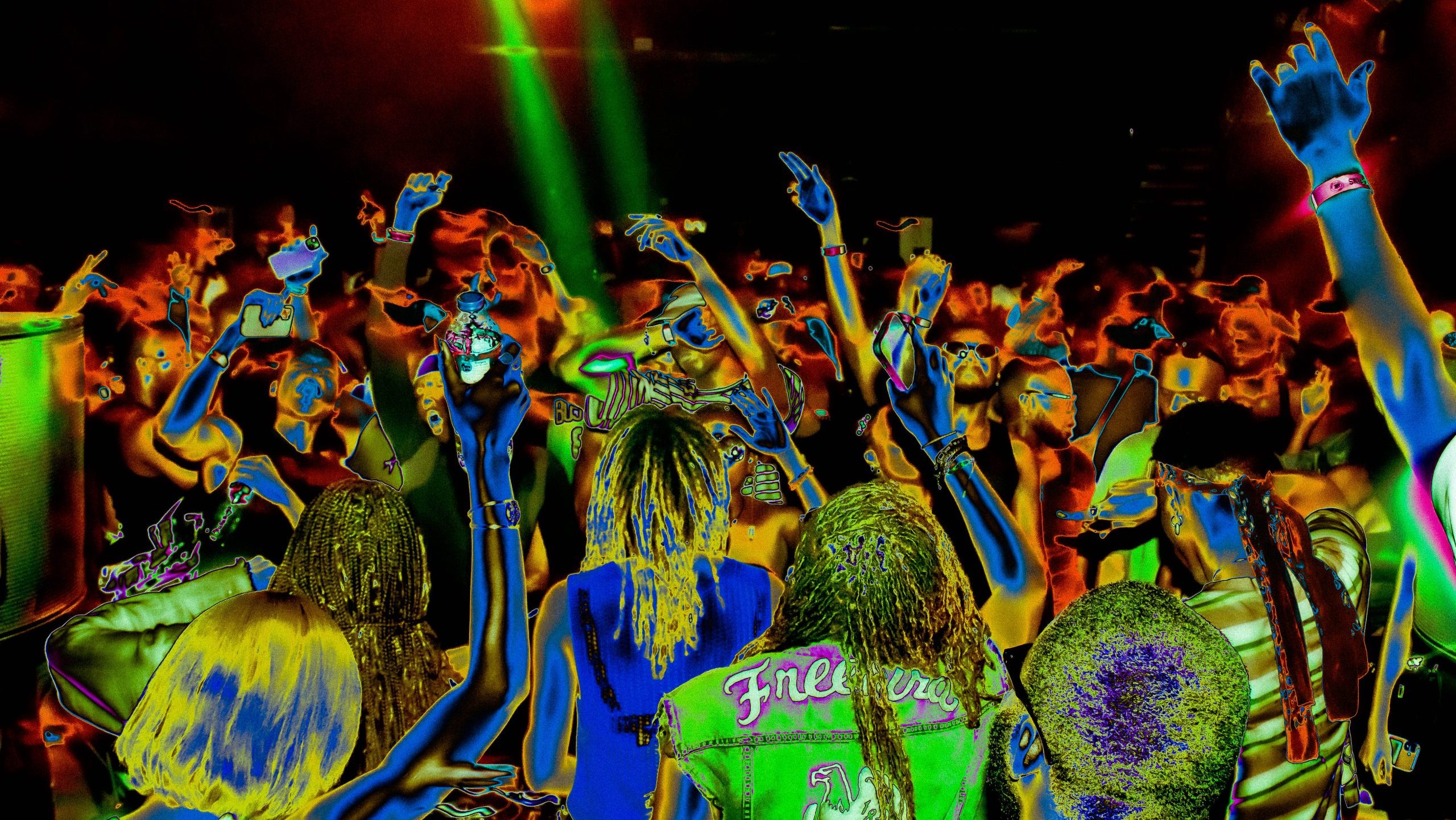
From the first minute of conversing with Ebi, also known as DJ Tomce and Dr Love, you can sense that he’s not one to waste words or time. His directness seems to serve him well: he’s a founder of one of the OG Nigerian raves, Sweat It Out. Together with his collective, he has laid down the architecture for one of Nigeria’s fastest-growing scenes and achieved something almost impossible while at it: sustained relevance. One cannot have a conversation about electronic music in the country with any kind of depth or substance without talking about what Ebi has built.
What he built started, as many great things do, from something small and personal. A birthday party in a short-let in 1004 Estate, a group of people who loved electronic music and a city that had not yet decided it wanted to love it back. That was 2019. Since then, the numbers have done their own talking. Spotify has reported a 403% surge in Nigerian EDM streams since 2022. Afro House rose from the 18th most-searched electronic genre on Beatport in early 2022 to the 9th by late 2023. Events, crowds, and conversations that simply did not exist half a decade ago now fill warehouses, studios, and some unconventional spaces across Lagos every weekend. The scene has been covered by i-D, OkayAfrica, and The Face. What began as a cult-status birthday party is now a cultural movement with international attention, and Sweat It Out sits at the centre of how it got here.
Ebi doesn’t seem particularly dazzled by any of it. He is proud, yes, but pride and satisfaction are different things, and he is careful not to confuse them. He measures himself not against what has been built but against what hasn’t happened yet, the full vision of what this scene can still become. He has opinions about the people who arrived late to the wave and started policing it. He has opinions about ticket pricing. He has opinions about what electronic music is supposed to mean and what happens when hype gets in the way of that. He has opinions, and he’s not shy to share them with little ceremony.
We sat down with him to talk about all of it.

At the time of the birthday party that birthed Sweat It Out, would you say you already recognised that there was a void in the Nigerian EDM scene that needed to be filled?
Yeah. There was one that needed to be filled, and there’s still some space that needs to be filled, I think. A lot of the stuff that you hear in the mainstream now is kind of not EDM, it’s kind of nonsense if I’m being honest. EDM comes in certain cultures and subcultures. It’s meant to be underground. It’s meant to be expressive. It’s meant to be educational. Meant to be devoid of hype and gimmick. That’s what we try to follow at Sweat It Out, and I think that’s why it’s still relevant.
We have people who may have lost the way along it, playing cookie cutter stuff, as they don’t want to do the work, digging or research. This stuff is really about pursuing obscure and liberating sounds and sub cultures, and trying to make people conscious. Unless we try, we will go back and will be stuck or be the thing (Lagosing/Nigeria) that you are trying to change.
Was Sweat It Out always going to be the title, or did you have some alternatives?
So actually, Sweat It Out is just the name of the party. The name of the business itself was going to be called Lime. We have a radio show, a podcast… The whole entertainment situation that we want to have going on sits under that.
There’s been a lot of conversation recently about the cost of raves from the point of view of the people attending, about how much it costs to buy tickets, drinks, and water at the events. Do you have anything to say to address that?
People need to understand that these costs are subsidised by the people who run the raves, especially the bigger raves. We understand that people are young. I understand that the cost of living is high. By any metric you look at, Nigerian raves are highly subsidised. You’re not going to see Yaya or anyone else we’ve booked in Europe or America for 6 dollars Purchase Power Parity (PPP) Equivalent, let’s be serious. But I think it’s kind of unfair to paint everybody with the same brush. If you sit down and actually do the math and look at the input costs, venue rental, lighting, production, and artist welfare, each rave has a different cost of production, and their pricing reflects that. Let’s be honest, some raves are priced for the experience, but some may be overpriced. But no organiser is trying to cheat you. People are trying to create experiences. And that’s also how the market segregates itself. Is every electronic music experience the same thing? So if you don’t want to pay for value, maybe don’t come.
Apart from cost, what is on your checklist when you are planning an edition?
We actually have a workshop coming up called The Anatomy of the Rave, coming up the week after Easter. We’re going to break it down across three sections: the organiser, the dancer, and the DJ. But the checklist for any event really comes down to the most important things: light, sound, promotion, and artist welfare.
Lagos is one of the worst places to try to pull anything off. What is the most Lagos disaster you’ve had to solve behind the scenes while keeping the party going out front?
I’ve been Lagosing every day, so I’m almost too Lagos to notice Lagos at this point. Most of the chaos has to do with Lagos elements creeping into the situation, people trying to hype it beyond what it is, people trying to downplay the experience and sell it for more than it’s worth, people trying to catch the wave and overhype it. Lagosness, Lagos in itself. The way we move, we try to take out as many Lagos elements as possible. The idea of Sweat It Out actually comes from the locals, with internationals coming in for cultural exchange.
So, you try to keep the true essence of what a rave should be?
Yes.
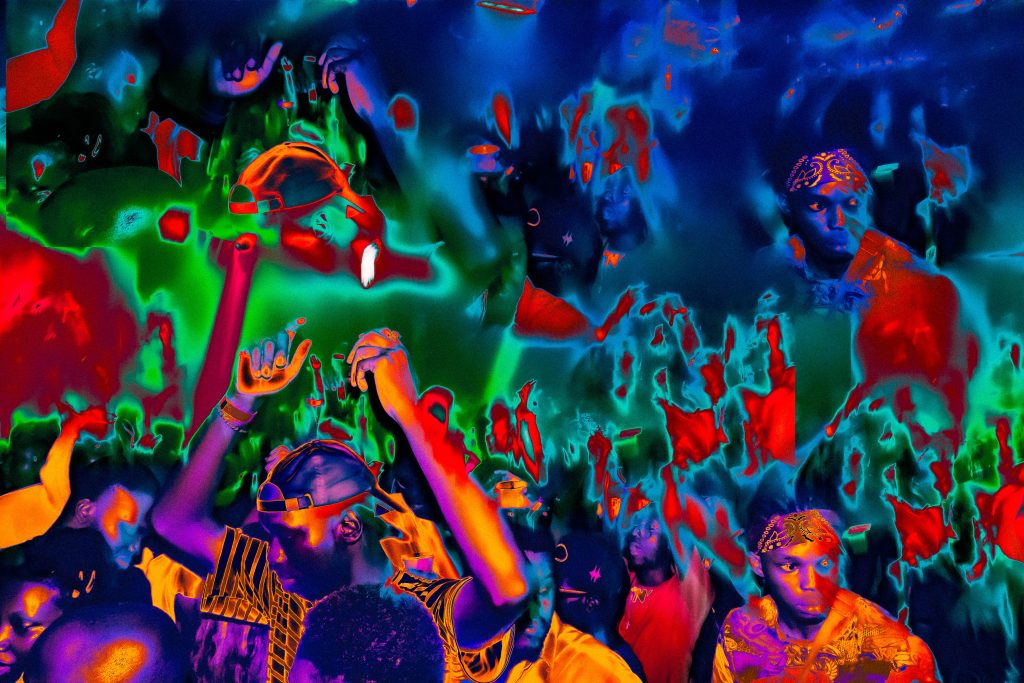
What is your take on the whole rave versus party debate? Who gets to use the word rave and who gets to decide?
I think one thing to understand is that Sweat It Out was instrumental in actually laying down the market architecture for the rave scene here. When we were setting these things up, somebody had to do it. It was not just altruism TBH.The idea was always about flow versus stock. Stock sits in one place. Flow keeps moving, circulates, keeps coming back. So the idea of setting up different markets supporting different parties was about the circulation of income, money velocity, keeping the ecosystem alive. We always tried our best to make sure we were not gatekeeping. The gatekeeping would be done by quality, and by how individuals accept the quality being given to them. No active blocking of words or discussions, because that itself is corrupt. At the end of the day, it’s for the marketplace, the consumers, to decide.
You operate in the same ecosystem as other events like Group Therapy, Element House, Monochroma, and Sunday Service. Would you say there’s still some competition, or is everybody giving everybody else a hand? Do you think the sky is big enough for everybody to fly?
There are 20 million people in Lagos; it’s big enough. But I don’t work in any industry where there’s no healthy competition. If there’s no healthy competition, who suffers? The customer suffers. Music cannot be the great liberator if it becomes the great oppressor, with people out there pressing the customer instead of serving them. I will always compete in production, in storytelling. That’s how I wake up. I love healthy competition.
Do you mind being copied?
Imitation is the greatest form of flattery.
Why are raves needed? Why do we need these spaces right now?
There’s the economics of it. But beyond that, Nigeria has a lot of misunderstood people, a lot of people who have been pushed to the margins. A rave is a place for those people to exist in unison with everybody else. Everybody should be welcome, regardless of where you come from or how you’ve been marginalised. The people who took risks to build these things did it because they had friends who needed that space. So you don’t want anybody coming in to police somebody else. That’s not what this is for.
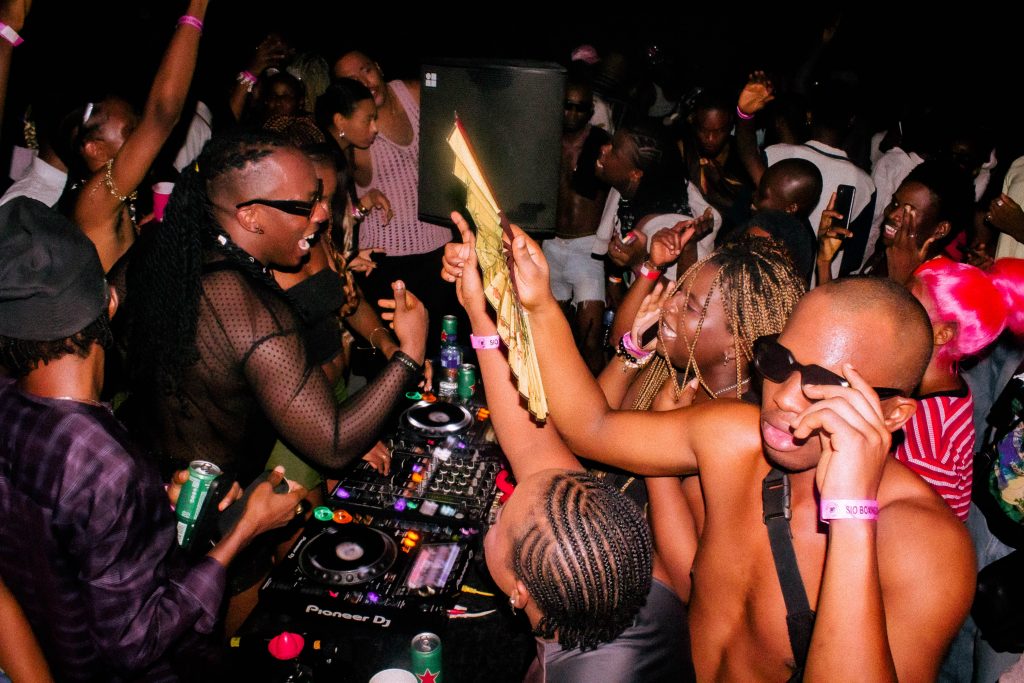
What is your ultimate rave experience, the best one you’ve ever been at, whether yours or someone else’s?
We’ve had a couple of classics. Sweat It Out Three, Five, Ten, all of them. Element House. But in terms of organisation and systems, I really appreciate what Group Therapy has built. We’ve collaborated a few times, Sweat Therapy.
How did that go for you? Were you emotionally satisfied?
Wow, that’s a question. Yeah, we were.
You seem to have an appreciation for the technical side of sound. Does it influence the way you plan your events, and do you think the people coming actually appreciate that, or are you doing it more for yourself?
That’s a beautiful question. The idea is that it’s always first for ourselves. But it’s also part of the education we talk about. You yourself might not know that the sound at a certain place is trash until you come to Sweat It Out, and you hear what proper sound should actually be like, the mid-range, the mids, the lows. That in itself educates the individual. You’ve now shown them that Nigerians can do extraordinary things in the midst of all these constraints.
When you work with corporate brands like Olmeca Tequila, how do you stop them from trying to sanitise your vision? How do you draw the line?
For about seven years, we rejected long-term deals. We had short-term partnerships before, but we always frowned on long-term arrangements where they could come in and influence what we were doing. When our current partnership came along, we had a clear discussion. They wanted to tap into the music scene and what we’re selling, and we both wanted to keep the essence of what we do. As we shift from a millennial to a Gen Z audience, we are both trying to reach wider audiences and external partnerships help bridge that income. Hopefully, it’s better for them, and it’s better for us.
Without the lights, without the fashion, without everything that comes with it, what is the one key thing that is the soul of a rave?
Sound, music, and people. That’s it.
A lot of people throw around the phrase “safe space” as a marketing buzzword. What does an actual safe space look like for you, especially in somewhere as hostile as Lagos?
Thank you for using the term ‘hostility’, because that’s truly what it is. A safe space is a safe space for everyone. Whether queer, Black, Indian, white, Japanese, it doesn’t matter. Everybody feels safe. No aggression. Respect for everybody’s personal space. Opinions are safe. No hostility. That’s what we call it.
When people speak about electronic music, they tend to view it as a Western thing, a white people thing. How would you respond to people saying this kind of sound is unnatural for Nigerians?
I would say that’s naive. Even if it came from somewhere else, we still do it our own way. Music has no borders. It shouldn’t have a colour or a taste. I’m particularly not into that business, the business of sitting at certain tables and pointing fingers about who owns what. That’s not what we’re doing here. We’re trying to spread love and self-actualisation through music, and we’re not going to be drawn into those ideological corners. Music is a great facilitator, and that’s why we’re going to keep doing it.
Now that you’re mainly behind the scenes, do you actually get to enjoy the parties as they’re going on?
People come to Sweat It Out and tell me I don’t enjoy my own party. Come on. I enjoy it now. The first two years, I was fully in it. Then, for about four years, I wasn’t enjoying it as much, due to a lot of factors, including working at a corporate at the same time. I had to learn to delegate, both before and during the party. But yeah, I’ve been enjoying it again the last year or so.
There was probably a point at the beginning where you could look around and recognise most of the people in the room. Does it feel different now that it’s so much more public?
Now, I never know more than 25 people in the room. My friends don’t come anymore because they’re old and married. They all have kids. There was one time a friend of mine came; he was like 39. I was like, “bro, you won’t know anyone here, oh.” It’s very different now. Before, it was more like the boys coming out, which was nice.
Which non-Sweat It Out raves do you approve of enough to attend?
My approval doesn’t mean anything. But fair enough, I like the ones that play more experimental, more tech, more creative. Apart from the ones I mentioned earlier, I go to Marina’s when Marina is playing. There’s also Honey Pot, Dudu Creatives, Lagos Underground and sometimes DNT on Thursdays.
What is your ultimate rave survival kit? What are the things you will not survive the night without?
Everything I could say is toxic, so I can’t be advertising such. I’ll just say go with yourself and go with the music.
What is one hill you are willing to die on regarding the Lagos creative scene?
If you are not being experimental and genuinely pushing the music, then what the fuck are you doing?
What is it like building a business with people who are also your friends? Does one side of it ever bleed into the other?
For me, work is work and friendship is friendship. I’m quite clear about that, almost ruthless. We have people around us who share the same values, and we put a lot of structure in place to avoid things getting messy. The lines can blur, but we try to manage the risk so the business still grows.
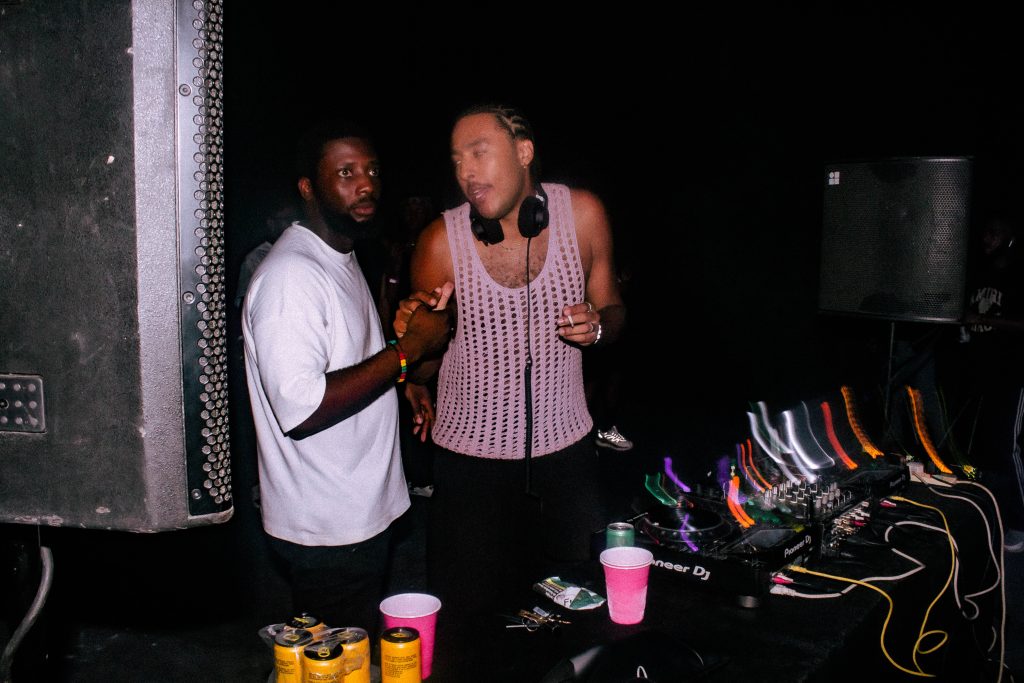
When we look back at this time, the electronic music renaissance of Nigeria, what do you want people to say about Sweat It Out?
That we tried.
Just tell the truth. I haven’t exported one real artist to a proper international stage. We haven’t had a live show that filled up the National Theatre. So don’t stop the hype, but tell the truth. The goal is for the Sweat It Out experience to keep pushing until those things actually happen.
Anything else you want to add?
Just that everybody needs to keep pushing. There is already a great market architecture here. I’ve been saying it for six, seven years. Everybody just needs to plug into it, expand it, and not be selfish about it. The idea is that you plug in so that people can grow from these things and so that you keep growing too.
Leave a Reply