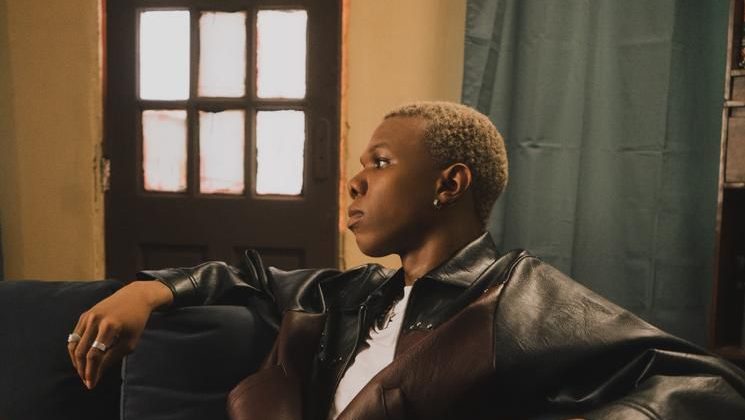
There’s a version of Chinedu Emmanuel Chijioke that keeps to himself: thoughtful, introverted, watching. And then there’s Khid Ceejay. The 21-year-old Lagos-bred artist didn’t invent an alter ego for the aesthetics of it but because he needed one, a vessel wide enough to hold everything he couldn’t say as Emmanuel but couldn’t stop feeling.
The name came first, borrowed from a secondary school nickname that stuck the way the right things do. The music came after: specifically, one night, one Billie Eilish song, one moment of feeling so seen by a stranger’s words that it rewired something in him. He heard it at 18 and made a decision: he wanted to do that for someone else.
What followed has been a quiet, deliberate pursuit of exactly that, music that doesn’t announce itself too loudly, but finds you in the right moment and refuses to let go. His growing TikTok presence and a catalogue of introspective releases have built him a following of loyal fans. Find You, a song he made alone in his room at what he calls “a really bad place mentally,” is still the one he’d use to introduce himself.
He’s 21. He’s just getting started. And if you ask him, the most important thing he’s yet to make hasn’t happened yet, because he hasn’t lived it yet. We caught up with him to discuss creating, growing up, and healing through music. Here’s what he had to say.
Your actual birth name is Chinedu Emmanuel Chijioke. At what point did you become Khid Ceejay, and what does that identity mean to you?
Ceejay was a nickname I was called in secondary school and I really liked it, so the name stuck. The Kid part just means kid, but with an H. Khid Ceejay is like a version of me that is more expressive, more social, more vulnerable. It’s like an alter ego. Emmanuel is just an introverted boy, but Ceejay is quite the opposite of Emmanuel.
So they have two different personalities.
Yeah.
How did you find your way to creating music? When did you start, and what was the catalyst?
I’ve always known how to sing. As long as I can remember, I’ve gotten compliments that I have a good voice, a healing voice. But I made the conscious decision to chase music back in SS2, when I was 18. I listened to a song by Billie Eilish, Everything I Wanted, and I resonated with it deeply. At that time, I couldn’t put what I was feeling into words, but that song literally said what I was feeling at that particular moment. I was like, okay, I really want to make people feel understood the way she made me feel understood. So I made a conscious decision to pursue music and started working on my craft, my voice, until I found my sound.
Did you grow up surrounded by music? Were you the kind of person who was listening since childhood?
Not really. I wasn’t very invested in music growing up. I’d listen and then might not listen again for two or three weeks. But I actually knew how to sing. My mom was a singer, she was in the choir, so I think I got most of my vocal training from her.
You’re 21 now. Do you think your age is an advantage, a disadvantage, or completely irrelevant when people hear your music?
I think it’s an advantage because I still have things I haven’t yet tapped into, things I’m yet to experience. At the same time, I don’t want people to be conscious of my age while listening to my music. I want them to feel what I’m trying to pass across first, and maybe my age comes into the conversation later. I don’t want them focused on my age. I want them focused on the music.
You’ve said you want to address every facet of the human experience, from introspection to celebration. That’s a wide range to claim. How do you decide: in this moment, with this song, this is the exact emotion I want to address?
I start with a melody. That’s just my process. I get a beat, I start with the melody, and because in any one beat I can find three, four, five different melodies, I wait for the one that clicks. A melody kind of clicks and tells me, this is what you’re trying to express. I pick that one and go straight to putting my feelings into actual words from there.
You’ve also described yourself as a cultural mood board. What is on Khid Ceejay’s mood board right now? Who are you listening to, who are you looking at, what feelings are currently influencing what you’re making?
I have Billie Eilish, Frank Ocean, Daniel Caesar. These guys are doing things I want to do. Then from Africa, I have Omah Lay and Tems. Those five artists really inspire me a lot. The way they make people feel is exactly what I want to do.
If your music had a dress code, what would it be?
Something soft. Not too flashy. Something you’d be comfortable in. Something that feels like home. Something introspective. At the end of the day, you just have to be comfortable so you can actually feel the music.
So comfort is the number one thing for you.
Yeah.
If there was only one album you could listen to for the rest of your life (and you can’t pick your own), what would it be?
That’s hard. If I can give my top three: Blonde by Frank Ocean, Boy Alone by Omah Lay, and Broken Ears by Tems which is technically an EP, but I think it counts.
As a young artist, how have you felt going from singing for your own enjoyment to being a public figure? A lot of artists talk about being unprepared for that kind of pressure.
We don’t really talk about this enough. Because it’s actually a beautiful thing, moving from your bedroom to people’s ears, having people relate to your music, love your music, wanting you to do more. But then there’s the pressure of, okay, you made this kind of song, now we want something exactly like that, without leaving room for growth. Growth is constant. As I grow, my music grows too. What I made last time shouldn’t be an exact copy of what I’m doing now. And then there are the hate comments on top of that.
So you think you should be allowed to evolve.
Yeah.
You’re active on social media and have a significant TikTok following. It can be a positive space but also a brutal one. How do you protect your creativity when there are always voices online telling you things, asking things of you?
The pressure is a lot, I can’t lie. But I’m at a point in my life where I don’t let trends dictate what I’m going to make. I don’t constantly listen to comments or what people want from me. I make music that resonates, and I don’t let the comments and the likes weigh me down. Sometimes you’re trending, sometimes the algorithm keeps you at a particular level. I just keep making the art regardless.
But on the flip side of that, if you’re making music for people to consume, shouldn’t the feedback of the consumer also be considered?
Yeah, I take feedback. I pick out the important ones and leave the unnecessary ones. And trust me, the unnecessary ones are more than the important ones.
You’ve spoken about live healing sessions as part of the vision for your performances. What does that actually look like in your head?
It looks like a free space where you can come and be vulnerable. You can call it a therapy session. A space where you come and you feel allowed to cry if you want to, allowed to sing your heart out. Just a space where you can feel at home. No noise from outside. Just a calm and serene environment.
Let’s talk about your new single, Happier. From the title, we can guess the general direction, but emotionally, what state were you in when you wrote it? And would you say the song is about becoming happier, or already being happier?
The title is actually quite the opposite of the meaning of the song. The lyrics are talking about hate, jealousy, and a sense of longing. Missing someone you gave love to, but instead of giving it back, they’re giving it to somebody else. Like you hate to see them having with another person what you could have had with them. It’s a love-hate kind of thing.
When people hear it for the first time, what feeling do you want them to walk away with?
I don’t actually want them to walk away with hate and jealousy. I want them to know they’re not the only ones who feel this way. That there’s actually somebody who felt the same thing and had the courage to put it in a song. I want them to feel understood. I want them to feel safe and know they’re not alone in their healing journey.
If you were to introduce a new fan using just one Khid Ceejay song, which one would you pick?
I know I’d pick Find You. Find You was a song I made in my room in tears. I was at a really bad place mentally when I made it. It resonates very deeply with me, even now, I still listen to it a crazy amount of times. If I’m to introduce myself to a fan, that’s the song I’d use.
Is there another song, not by you, that you’d pick for someone to get to know you?
I think I’d pick Interference by Tems.
Leave a Reply