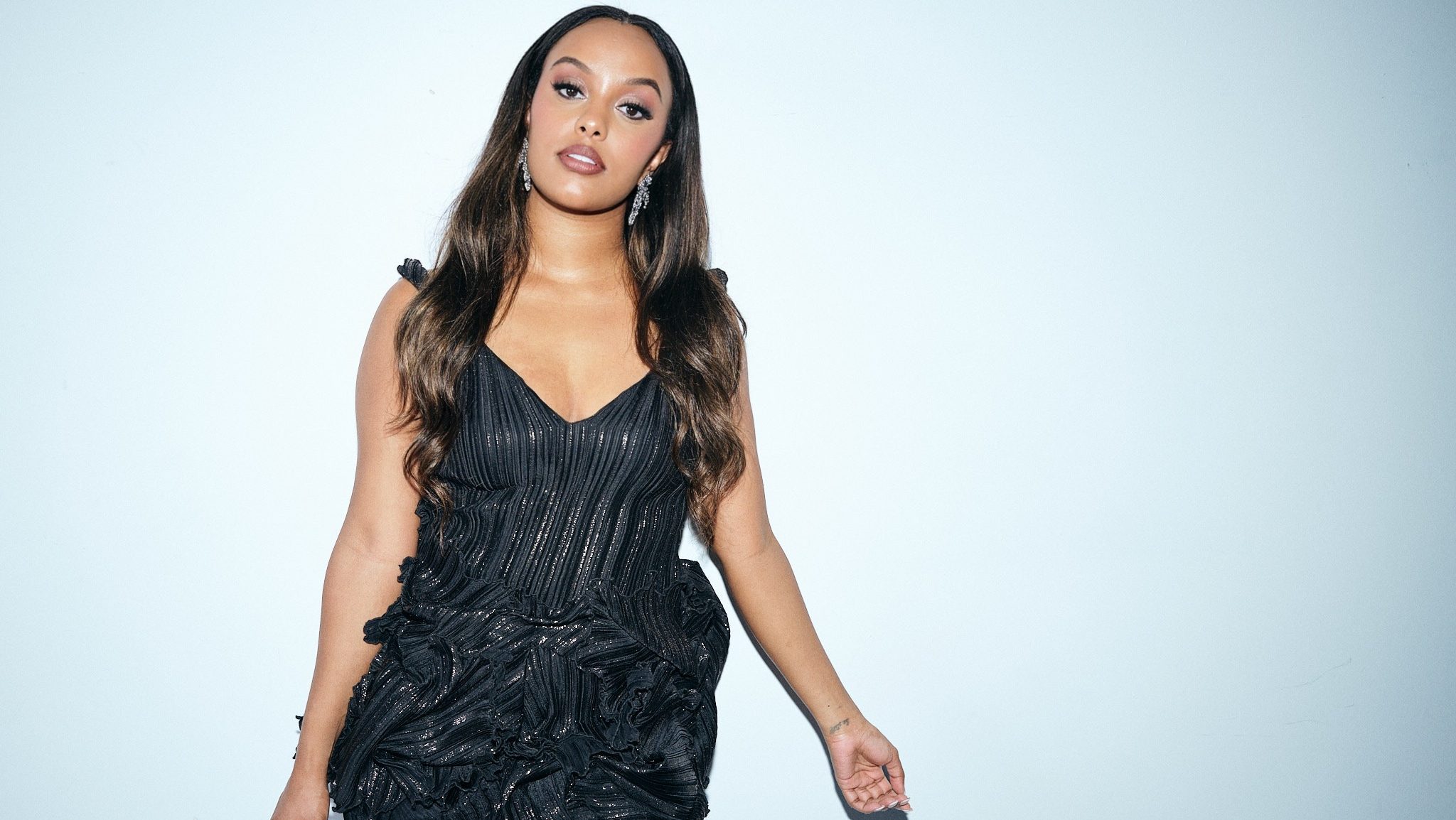
Ruth B. has a way of making you feel like she wrote the song specifically for you. That is not an accident. The Edmonton-born, Ethiopian-Canadian artist has built one of the most quietly remarkable careers in contemporary music, not through industry machinery or calculated virality, but through the kind of emotional honesty that makes strangers feel seen. Lost Boy became a billion-stream record, and announced her as someone with a rare gift. Dandelions followed and became something even larger, over 6.2 billion streams globally, a song that has long since outgrown its creator and taken on a life of its own. Then, Mixed Signals found its way onto Rod Wave’s chart-topping ‘Street Runner’, leading to a sold-out Barclays Center performance that introduced her to an entirely new audience who had no idea they had already been listening to her.
Now she is back with Didn’t I, her new single, and Peace To Make, an album she describes as a journey from brokenness to strength. The title, she says, isn’t just a phrase but the common thread running through every track, a yearning for answers and resolution that she believes ties the whole project together. With over 9 billion global streams and 15 million monthly Spotify listeners, Ruth B. is at a point in her career where the numbers can best be described as staggering. And yet, she measures success by something else entirely.
Growing up in Edmonton to two Ethiopian parents shaped her music more than she initially realised, Ruth says, and mostly in ways she wasn’t conscious of at the time. Ethiopian music is melodically rich, and looking back at her own catalogue now, she can hear that inheritance running through it, even though she was never deliberately reaching for it. “When you’re raised in it, it kind of intrinsically becomes a part of you,” she says.
That instinct for melody found its first mass audience almost by accident. Lost Boy began as a Vine and turned into a billion-stream record before she had any real frame of reference for what that meant. She wrote a lot of those early songs in her basement back home while still in school, with no expectation they’d travel beyond her own room, let alone the flood through the masses. Even now, she says, seeing numbers like that still genuinely startles her. Dandelions took that surprise even further, racking up more than 6.2 billion streams and becoming something that feels, in her words, “so much bigger than the person who wrote it”. She describes feeling lucky to be the one who gets to perform it rather than being possessive of it, pointing to a recent show where the entire crowd sang the song back to her louder than she was singing it herself. “It’s a beautiful feeling,” she says.
That gift for emotional specificity is exactly what has made her music resonate so widely, including with African and Nigerian audiences who gravitate toward music that says what people feel but can’t always put into words. Ruth B. says she writes with both instincts running at once, aware that people are going to listen and wanting to offer something universal, while still grounding everything in her own real experiences. “I think it’s just really nice that my honesty in my music has been able to connect with so many people,” she says. “Because I write about real life, which we all go through, I guess it’s relatable because it’s just real.”
Her reach has kept surprising her in new ways. Mixed Signals ended up sampled on Rod Wave’s Street Runner, which hit number one on the R&B charts, and led to the two performing together at a sold-out Barclays Center, the biggest crowd she says she’s ever played to. Plenty of people in that audience had no idea the sample was hers until they were standing in the room. “I was just blown away by how loud everybody was,” she says. “Rod is such a great guy, and I hope we can do it again soon.”
Her new single, Didn’t I, comes from a much more private place, born out of the familiar experience of telling someone exactly what you need and not receiving it. She describes the song as a kind of vindication, a gently delivered “I told you so”, and hopes it lands the way most of her music does, making people feel less alone in something they’ve already lived through. “We all feel these things,” she says, “and it’s just a part of life.”
That same searching quality runs through Peace To Make, her forthcoming album which houses the single. The title borrows from one of the record’s own tracks, a habit she’s kept across her career, and was chosen because it captured the thread running underneath every song on the project: a longing, an angst, a reaching for peace and for answers. It’s also, in her telling, the emotional engine of the whole album, a journey that starts in brokenness and ends somewhere closer to strength. The closing track functions almost like a personal anthem, the moment she finally chooses herself, and it’s the feeling she most wants to leave with listeners. “I hope people walk away feeling like they’re also going to choose themselves,” she says.
Keeping that level of intimacy intact in an industry that increasingly rewards volume and virality hasn’t been effortless, she admits. The landscape has shifted dramatically over the course of her career, and she’s watched enough of its ups and downs to stop trying to predict what comes next. What keeps her grounded instead is returning to the actual reason she started, her love of writing and making music, treating that as the nucleus of everything else. “You just have to stay committed to your art and know why you’re doing it,” she says.
Recognition from home carries its own particular weight for her. A JUNO Award winner with six nominations overall, she says being acknowledged by Canada specifically still means something distinct from the scale of her global numbers, and that performing at the JUNOs remains one of her favourite parts of the job. She holds a similar pride in her Ethiopian identity and the broader moment African and diaspora artists are currently having on the global stage, one she feels lucky to be part of, even as she notes it’s overdue. “It’s a shame that it took so long for it to make its way over here,” she says, “because Africa has been producing such beautiful, amazing artists and music.”
Her own listening reflects that world, she counts Tems, Ayra Starr, Burna Boy and Tyla among her current favourites, and if she were writing something specifically for a Nigerian audience, she suspects it would land somewhere emotional and romantic, “maybe like a Dandelions part two,” something whimsical and lovely, built for an audience she already knows responds to that register. Asked which song by someone else she wishes she’d written, she doesn’t hesitate: Imagine, by John Lennon.
For all the streaming milestones, Ruth B. is clear that the numbers aren’t where she locates her real sense of accomplishment. Her definition of success has shifted over the years, she says, and while a figure like 9 billion streams is something she remains grateful for, what she actually chases is impact, the kind of moment when someone tells her a song helped them through something difficult. “That, to me, is the ultimate success,” she says. “Numbers come and go. But that is forever.”
As a sneak peek of the album, Ruth describes the sound using metaphors outside of music entirely; she reaches for comfort: a warm cup of tea, calming and familiar, and a bowl of soup you come home to after a cold day. As a colour, she lands on red, “so emotional, so full of feeling.” And true to how deliberately she assembles her records, she confirms she takes tracklisting seriously, spending months getting the sequence of Peace To Make right, hoping people ingest it sequentially from start to finish the way she intended. Still, she isn’t precious about it. If shuffle is more your speed, she says, go for it.
SOCIAL CUTS
1 — on her Ethiopian roots “Growing up around Ethiopian music and culture, it’s really rich melodically. I don’t know that I was doing it on purpose, but I think when you’re raised in it, it kind of intrinsically becomes a part of you.”
2 — on Dandelions “It kind of feels so much bigger at this point. I just feel lucky that I’m the person who wrote it and I get to perform it. I had a performance yesterday and everybody sang with me really loud. It’s a beautiful feeling.”
3 — on why her music connects “Because I write about real life, which we all go through, I guess it’s relatable because it’s just real.”
4 — on protecting her artistry “As long as I know that I love writing and I love making music, that’s the nucleus of what I do. You just have to stay committed to your art and know why you’re doing it.”
5 — on African music’s global moment “It’s a shame that it took so long for it to make its way over here, because Africa has been producing such beautiful, amazing artists and music. I’m a very proud Ethiopian and it means so much to me to be in that conversation.”
6 — on what success really means “If someone tells me that a song of mine helped them get through something, that to me is the ultimate success. Numbers come and go. But that is forever.”
7 — on Peace To Make “This album captures a journey from a place of brokenness to a place of strength. The last song is kind of my anthem where I finally choose myself. I hope people walk away feeling like they’re also going to choose themselves.”
8 — on what the album feels like “A nice warm cup of tea, very comforting and calming. And for food, a nice warm bowl of soup that you come home to after a cold day outside. As a colour, I’d say red because it’s so full of emotion”
Leave a Reply