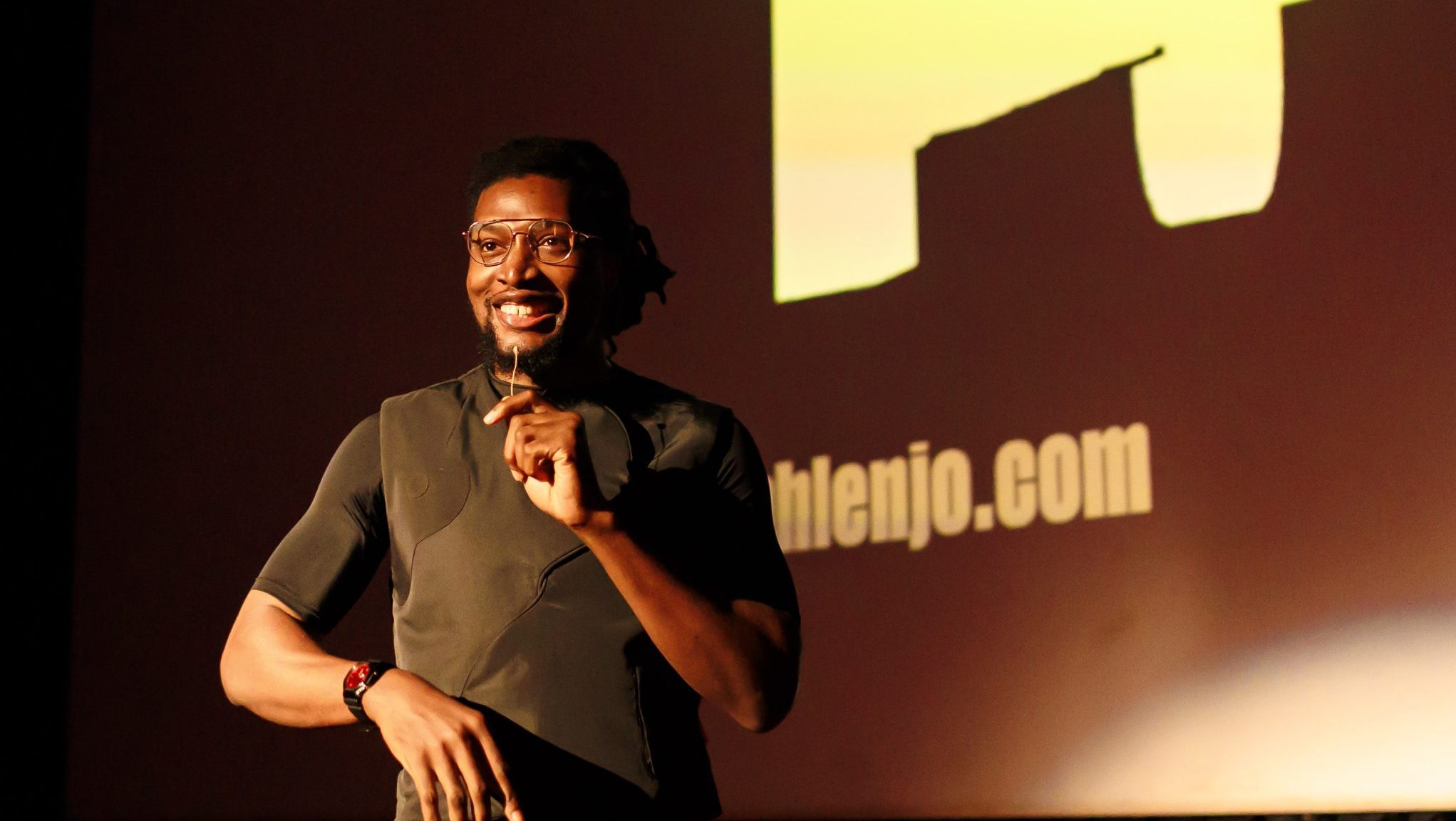
What started as a thank-you party for clients of a Lagos media company has become one of the most talked-about names in African nightlife. Ebuka Nwobu and his brother Chisom run LADDER, LEX & BOOKER, a film and media production company in Lagos, but it’s the party arm of their world, formerly known as Vogue Boys, that’s carried their name from Lagos beach houses to Milan and Paris Fashion Week.
The formula is deceptively simple: take the DNA of a Nigerian street festival, the noise, the abandon, the masquerade dancers who’ve shown up at every major Igbo celebration for generations, and rebuild it for a warehouse rave. The result is Dirty Sexy Rave (DSR), the indoor party series that’s become the brand’s signature, alongside Summer Cookout, its outdoor waterpark counterpart. Both are built on the same instinct: Nigerian parties don’t need to be diluted to travel. They just need someone willing to package them with intention.
That instinct was tested this year, when Vogue, the magazine, took issue with the name Vogue Boys and moved to shut it down, forcing a rebrand mid-momentum, right as the brand was breaking into international markets. Nwobu and his team turned it into Phlenjo: a name pulled from Nigerian pidgin, once slang for having a good time, reintroduced for a new generation.
We sat down with Ebuka to talk about the masquerade as a recurring character in his parties, the trademark dispute that forced a rebrand, why he thinks Nigerians don’t need to court a white audience to go global, and what it would take for Lagos to become the best nightlife city in the world.
How would you introduce yourself to someone who’s never heard of you or been to any of your events?
A creative producer living and working out of Lagos, Nigeria. I produce new media and experiences.
And Phlenjo is a different thing entirely?
Phlenjo, which used to be known as Vogue Boys, is an experience production company. You’re working out of Lagos, trying to put forward authentic African experiences, reimagined for a contemporary global audience.
Vogue Boys started off as a thank-you party for clients of your production company. At what point did you look around and realize it had grown beyond that?
There were a few different points where the growth became obvious. Like I said, the first one was a thank-you party, and that became a culture, we’d have it every New Year. We couldn’t do it in 2021 because COVID restrictions were still on, but by 2022 we had it again at the same venue, and it was too much. This beach house’s facilities were literally crumbling under our feet, the decks and everything, because there were too many people. I think that’s when we realized there was a real demand for what we were doing. On the party side, at that point we still weren’t branding ourselves as event producers, it was still just vibes. Then that Easter, we had a cookout event. We put tickets at around 8k naira and sold so many. Before that, everything we’d done was invite-only, maybe 400 or 500 people. So when people put their money down and said, yes, this experience is worth 8k to me, that’s when we realized we were in the business of building something real.
The masquerade has become an icon at your events, and you’ve described it as channeling ancestral spirits into contemporary nightlife. Did that come from your culture? What does it mean to you personally?
Yes, the masquerade came from our Igbo culture. I didn’t like the idea of “just a party,” that’s the easiest thing in the world if you have music and alcohol. So the question was always how do we push the envelope and make this more than a party, make it an experience. When we were building Dirty Sexy Rave, our indoor warehouse rave, we kept asking what elements we could add, because there are so many raves out there already. And it occurred to me, there’s this element of our culture that shows up in every celebration. Growing up Igbo in Lagos, I associated masquerades with celebration. Of course, there are deeper meanings to them, they’re channeling different things, but seeing them in that celebratory environment made me think: this belongs to us, it’s our culture, and we have license to reimagine it for a modern context. If masquerades can show up at a village festival, why can’t they show up at a rave? When we first introduced them, people were hesitant, some Nigerians are genuinely a little scared of masquerades, some think they’re devilish. But once people get into the space and see the masquerade a few times, it just becomes another character at the party. Funnily enough, the masquerade gets the most love of anyone there, people dancing with it, dancing on it, doing dance-offs with it. At the end of the day, you don’t really know what people want until you give it to them. I’m Christian, so I understand why some people have negative preconceptions about the masquerade, but I also believe things can be reimagined and take on new meaning. I think we’ve done that, there’s a new generation now who see a masquerade and think “fun” instead of “fear.” I see that as reclaiming our culture in a unique way.
You’ve taken Dirty Sexy Rave to Paris and Milan. How did you know what you were building would have global appeal?
I always knew it had global appeal, because Nigerians have an advantage when it comes to going international, we have a huge diaspora. You don’t need to target white audiences first. You can target the diaspora: people who grew up abroad but inherited a Nigerian identity from their parents. Those are the people always looking for ways to connect with the culture, and they bring their friends along. The international success of artists like Rema is directly tied to that. I always had that mindset, though I don’t know many people doing it in the events and lifestyle space specifically. But the success of our musicians was proof that Nigerian art and culture has international value. The first thing we did internationally was actually the Milan event, and we were invited to do it, which ties back to our media company. We’d made a lot of videos for the music scene, artists like Santi. There was an exhibition happening in Milan around that culture, and the organizers reached out because they saw us as pioneers on the visual side. As we got talking, they found out we were also doing events, and asked if we’d activate our experience as the after-party for the exhibition. Since we were already going to be in Europe, we figured we might as well do something for Paris Fashion Week too. That trip opened my eyes to two different kinds of international exposure. In Milan, ninety percent of the crowd was Italian, and a lot of them barely spoke English, but you should’ve seen the energy when they heard the music and saw us perform. You just know there’s a real market for something like that. It’s the same way I listen to Bad Bunny sometimes without knowing what he’s saying. I still feel it. Sound and energy translate.
Vogue magazine took issue with the name Vogue Boys and forced you to stop using it. You’ve described it as a turning point rather than a setback, but in the moment you got that notice, what were you actually feeling?
Honestly, I wasn’t surprised. In their shoes, I probably would have done the same thing. I’m a realist, it was disappointing, but I knew right away it was done. What I was hoping for was that they’d release our account, since we’d grown it significantly, and let us do a name change without losing it. That didn’t happen. From that point, it was clear we had to rebrand, though we couldn’t do it immediately. Honestly, we always knew we’d need to rebrand eventually, for a few reasons. People liked the name Vogue Boys, but it has “boys” in it, and I think that made it feel like it appealed to boys alone, when girls are at least half our community. From an inclusion standpoint, it wasn’t the best name. We also knew the Vogue association could be an issue, especially since some of our media production work had actually been affiliated with Vogue before. So we always knew it was coming. At this point, I’m actually grateful it happened when it did. This was the first time we’d done anything internationally and gotten press for it, and it happened almost immediately, which meant our exposure internationally as “Vogue Boys” was minimal. In Lagos and Nigeria, people already knew us. Internationally, they didn’t yet. If this had happened three years into building an international audience as Vogue Boys, we’d have lost a lot more. I think it was divine timing, honestly. Now we get to grow both at home and abroad with an identity that’s a hundred percent ours.
But you’re still sad about losing the account?
Oh, of course. But I don’t dwell on things for too long. Stuff happens, you lose money, you lose an account. You dust yourself off and keep moving.
Can you break down why you chose the name Phlenjo? Walk us through the thought process once you knew you had to find a new identity.
The first thing was finding a name that checked all the same boxes Vogue Boys did. It had to be one word, because one-word names are just better for branding. It had to be catchy. And it had to sound like us, meaning Nigerian. Our overall goal is to create authentic Nigerian experiences packaged at a global standard, so the name needed to be both authentically Nigerian and exportable. We looked at names from Nigerian languages, Igbo names, Yoruba names, and pidgin names too, because pidgin belongs to all of Nigeria, not one ethnic group. I remembered that when I was growing up, “flenjo” was a word people used, it’s not used as much anymore, but back then it meant to have fun, to enjoy yourself, to party. So the actual pidgin word for what we do wasn’t even taken. Except when we did our due diligence for business registration, we found other businesses, restaurants, a beer brand, already using variations of it. So we stylized it slightly, keeping the same sound. That’s how we landed on Phlenjo. I’m glad we did, because it sounds like us, and it’s got a good ring to it. I also think it has the potential for a resurgence. If we do our work well, the way people used to say “flenjo” in the 2000s, they might start saying it again. The way Uber became a verb for hiring a car regardless of the app, or Indomie became shorthand for instant noodles, I want Phlenjo to become what people call a good time, whether or not it’s literally our event.
The rollout campaign for the rebrand built real anticipation. How did you conceive and execute it?
We do everything with intention, so the way we announced the name had to be intentional too. We’re always thinking about how to introduce something properly, we’ve done elaborate rollout campaigns for our events before, like giving people Vogue Boys “passports.” So we asked ourselves what the best way to introduce this new name would be, and landed on a teaser campaign. It was inspired by fashion houses in Europe and how thoughtfully they invite people to shows during fashion week, always some deliberate object or gesture. My brother had the idea for a teaser campaign inspired by an old MTN billboard campaign in Nigeria: for over a month, all you’d see on billboards was the phrase “what’s beautiful?”, no context, just that. Eventually it was revealed to be “life is beautiful, with MTN.” We thought we could do something similar. Our new logo has an asterisk before the name, so we started with just “What’s the *p” and since people didn’t know a rebrand was even happening, they assumed it might just be another party announcement. It helped that we kept it mysterious. We pulled a list from our ticket sales of the people who’d attended the most events and sent them personal invites without telling them what it was for. They all showed up anyway, which was its own testament to the community and brand loyalty we’d built.
Alongside the events, you also run a film and media production company. How much does your filmmaker brain shape the way you design event experiences?
It does help to be a filmmaker, you’re thinking about whether something will be photogenic, at minimum. But I don’t think it’s specifically my filmmaker brain that shapes things. I think it’s just how my brain works generally. I try to be unique in my approach to everything. That mindset existed before I was working in media production, and it carries into whatever I do. Even if I started designing underwear tomorrow, I’d probably approach it the same way, wanting it to feel thoughtful and distinct. That said, years of producing films and media in Lagos does teach you how to make ambitious things happen with limited resources, in a place that often lacks infrastructure. You’re dealing with vendors, you have a vision you’re trying to execute, it’s basically the same skill set. So I’d say the work experience of producing films gave us more of an edge than simply being filmmakers.
A couple of years ago, Lagos was ranked the sixth-best city in the world for nightlife. As someone actively building in that culture, what does that recognition mean to you, and what do you think needs to change for Lagos to rank higher?
I remember hearing something like that, and obviously, as Nigerians, we’re proud of any global recognition, but at the time it didn’t feel like a win I could personally claim, because we weren’t really in the scene yet. And even now that we are, I still can’t fully claim it, because we have such big ambitions for how we want to reimagine the event space here. I think what needs to change is this: right now, our parties are lit because we’re lit people. If you put creative, musical, energetic people in a room, it’s going to be a party, whether it’s a house party, a wedding, or a funeral. That’s just given who we are. But I want to see us go beyond that, put more intention into curating the experience itself, so that when people who aren’t naturally “lit” walk into the same space, there’s something structured they can tap into as well. It’s not just about energy, but about what the event demands of you. Dirty Sexy Rave, for instance, isn’t for everyone, even the name tells you what energy you need to bring. The experience itself isn’t as harsh as the name sounds, but naming it that way sets an expectation. Once you buy a ticket, you’ve entered a kind of silent contract: you’re bringing your wildest, most confident self. And because everyone shares that same expectation, there’s rarely any harassment, everyone’s on the same page about what the night holds. I think that’s the path to becoming the best nightlife city in the world: building on what we naturally have, with real intention, and also borrowing ideas from places that don’t have our natural energy but compensate with structure, activations, lighting, effects, production value. We want to be the best at bringing people together and the best at building genuinely new, authentic experiences, not just naturally loud people, but people who are better than the rest of the world at curating a night out.
You’ve used the words “authenticity” and “intentionality” a lot, and those get thrown around a lot in creative industries. What does it actually mean in practice when you’re building an event?
For me, it’s about making sure there’s a signature in everything, a version of it that’s unmistakably mine. There’s jollof rice across West Africa, but what makes one version “Nigerian jollof” and another “Ghanaian jollof” is how each culture approaches the same base dish. Everyone who does anything is authentic to some degree, because they made it, but if you’re just copy-pasting, that’s not the kind of authenticity I mean. It’s not that you can’t borrow from somewhere else, it’s about what you do to it once you have it. Like the saying goes, good artists copy, great artists steal. You take a tank top, but then you rip it, crop it, spray-paint it. Now it’s something new, something the person you borrowed it from doesn’t recognize anymore. I think of authenticity as taking something and changing it by a small percentage, but making sure that percentage comes from deep within you, not borrowed from somewhere else. So yes, raves exist, but what if the two percent we add is a masquerade dancing on stage? That’s something only we could have brought to it. That’s our voice showing up. Sometimes it’s subtle, sometimes it’s obvious, but the key is always making sure there’s something in there that only you could have added.
What’s the most chaotic thing that’s happened at one of your parties that attendees had no idea about, either during the event or in the lead-up?
It was at Summer Cookout. We had cookouts two weekends in a row and then Easter in Lagos right after, I don’t know why we scheduled it that way. For the Abuja edition, we were about ninety per cent set up on the day of the event, sound was done, everything was nearly ready, when it suddenly started raining hard. It only lasted about five minutes, but that was enough for the wind to tear the stage down. This was maybe three hours before doors. But tickets were sold, so the show had to go on. It became an all-hands-on-deck scramble to rebuild while people started arriving. Some things were still being fixed as guests walked in. It turned into a great night in the end, but moments like that happen more than people realize.
If you could host a party in any city you haven’t been to yet, where would it be and why?
That’s a good question. I’ve never really thought about it. The first place that comes to mind is London, around Notting Hill Carnival time. It’s a huge street carnival, historically a Caribbean tradition, but I know Nigerians have done their own pop-ups around it over the years. I’d be curious to build our own version of that, something that could pull the Caribbean crowd in too, almost as a way of making a point. I’d want to do a water activation, we used to call it “cycle,” now we call it Phlenjo wet, get everyone wet in the middle of a London carnival. Technically harder to pull off in the UK, since people are more protective of that kind of chaos there, but that’s exactly why I want to do it.
Phlenjo’s mission is to globalize Nigerian nightlife without watering it down. Where do you draw the line between making something accessible to a global audience and losing what made it special in the first place?
I don’t think there’s a line to draw, because what made it special was never the crowd. It was us, the curators. The same Nigerians who come to our parties go to a dozen other Nigerian parties every weekend. The difference isn’t the people, it’s the intention behind the curation. As long as we stay stubborn about that intention, about our voice showing up in everything we do, we won’t lose anything by going global. Milan proved that. We had masquerades dancing on stage and white Italians losing their minds on the dance floor. That told me it was never really about who’s in the room. Everyone wants a good time, that’s universal. But people also want something different, and what we do is different from what everyone else in Lagos is doing, which is exactly why the people drawn to us are drawn to us, even within Lagos itself. Taking that internationally is more or less the same thing, just with a different crowd.
Your closing words at the Phlenjo launch were that sparks aren’t meant to stay sparks forever, eventually they become fire. What does that fire look like for you in five or ten years?
I have a clear picture of it, because I see it all the time. It’s a world where global superstars are selling out venues around the world, and Phlenjo is selling out those same venues, maybe weeks or days later, but for a different reason. They’re selling tickets to hear their music. We’re selling tickets to curate the experience where that music is enjoyed best. When we get to that point, we’re not stopping.
Leave a Reply