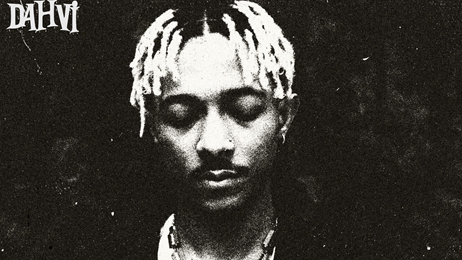
The music industry rarely hands out invitations; more often than not, it requires a forced entry. For Desmond Frank, known to the world as Dahvi, his sophomore EP, Ready or Not, is a door-splintering arrival. In this exclusive conversation, Dahvi takes us through the acts of his life: from the early days of unnoticed brilliance to the complexities of modern romance, strategic collaborations, and the ultimate realisation of his divine destiny. explains why, in a world where “both genders can be funny”, the hustle must always come first.
Act I: The Forge, The Theatre, and The Port Harcourt Grit
- The title of your sophomore EP, Ready or Not, carries the energy of a mandatory arrival, a declaration that the industry must make room for you. Looking back at your time growing up in Port Harcourt and graduating from Theatre Arts and Film Studies in 2021, where did this defiant confidence originate? Was there a specific moment of gatekeeping or doubt that forced you to adopt this “takeover” mindset?
I wouldn’t say all through my time in music making because my early years was me still learning about my craft and harnessing it, so it was the period I started dropping songs I knew was way better than the average, and people in my vicinity weren’t trying to notice that it was everyday you see someone do it so effortlessly, I knew I had to take it by force.
- In “Patty Cake,” you use a brilliant metaphor, contrasting a children’s game with the gravity of your real-world ambitions. You mention that what others dismissed as “child’s play” was actually a deeply spiritual vision. How did your formal training in Theatre Arts shape your ability to turn your personal struggles into such a vivid, theatrical narrative?
Ironically, theatre did not help me a lot with my music writing or imagery. Even though I occasionally employ a lot of theatrical terms, the core ideas, melodies, and scenarios have always just played out naturally in my head. If I’m being honest, it was actually my days in secondary school that helped me the most with the literary devices I use today.
- “Peace of Mind” feels like an anthem for the modern grinder, focusing on protecting one’s energy and prioritising inner calm over public validation. In a hyper-connected world where artists are expected to constantly perform both on and off the stage, how do you personally define “survival” without losing your peace?
You survive by ignoring the distractions from a negative society and staying completely focused on your goal, despite the hard times and the constant “no’s”. You have to move with the knowledge that wealth, power, and respect aren’t handed over; they are earned.
Act II: The Anatomy of Modern Romance (Desire vs. Devotion)
- Moving into the emotional core of the EP, there is a fascinating sonic shift between “Mood” and “Samory.” “Mood” celebrates unfiltered, playful, and confident physical attraction. “Samory,” on the other hand, dives into profound, anchoring emotional loyalty. As a songwriter, how do you view the relationship between lust and love in the life of a rising artist? Do they conflict with one another, or are they just different stages of the same human need?
Love and lust are needed to be experienced in everyone’s life for clarity. It’s important to know where one stands in a relationship so as not to be disappointed or hurt. - “Samory” is an incredibly striking title. Were you invoking the name of Samory Touré, a legendary West African ruler celebrated for his fierce resistance against colonialism or does it have a different meaning?
(Laughs) I actually just looked that up right now! That is a striking coincidence. Although I will say the concept behind my song is actually very similar, because I am definitely a fighter for love on that track. - Bella Shmurda joins you on “Samory,” bringing a distinct, conscious “street-pop” texture to a love song. What did Bella’s specific energy bring out in your own performance, and why was he the right collaborator to help anchor this “love for the modern grind”?
Because Bella’s sound is like none other, I needed a distinct and powerful vocal house like Bella that would take it a bit away from where I’m already at with my emotions. Bella brought a great energy to complement the song for sure.
Act III: The Post-Success Confession (Hustle vs. Heart)
- There is an unspoken cultural script for young men: “make I find money first before I find love.” Your track “Lonely” beautifully upends this narrative, showing the hollow aftermath of prioritising the hustle over the heart. Do you think modern hustle culture is forcing our generation to sacrifice deep intimacy for financial security?
Yes, it is. But honestly, with the way things are going in the world right now, it is just wiser to secure the money first—because both genders can be very funny these days!
- The lyrics in “Lonely” paint a devastating picture: stepping away to “find cheddar” for “Cinderella,” only to realise that her absence echoes louder than any bank alert. Is this song a warning to your peers, or is it a vulnerable reflection of a personal sacrifice you’ve had to make for your career? How does it feel to achieve the dream but experience emotional isolation on the other side?
Not a warning, just a genuine expression of my experience with love and heartbreak. Love is beautiful when it’s mutual, so I would say until it’s found mutually, chasing money is more important.
- The project closes out with “Blow Empty,” which tackles the exhaustion of one-sided digital connections and mixed signals. In an age of Instagram DMs and curated lifestyles, why do you think it has become so easy for people to provide an “unfulfilled presence” in relationships? What was the breaking point that inspired you to write a song about knowing when to step away?
“Blow Empty” was inspired by relationships that just keep lingering with so much uncertainty about what you’re even doing there in the first place. The breaking point is wanting her to just come out clean and say, “We can’t work out,” rather than having me keep spending my time, my energy, and my money being “Mr. Right” for the wrong one.
Act IV: The Coronation
- The self-titled track “Dahvileon” acts as a spiritual coronation. You explicitly state that your success isn’t luck; it’s destiny earned, and divine protection realised. When people finally finish listening to the Ready or Not EP from top to bottom, what is the single most important cultural nuance or emotional truth you want them to understand about who Desmond Frank (Dahvi) is today?
I want them to know that nothing is coincidental; it was all meant to happen exactly this way. My being here, my gift, and my purpose are all matters of divine orchestration. When it all finally gets fulfilled, it’s just going to be a manifestation of God’s purpose coming to light. So right now, I am entirely trusting the process.
With Ready or Not, Dahvi is executing a pre-destined blueprint. By leveraging his theatrical sensibilities, Port Harcourt’s resilience, and pragmatic views on love and money into this EP, Dahvi has established that whether the world is ready or not, his coronation has begun.
LISTEN TO READY OR NOT NOW.
Leave a Reply