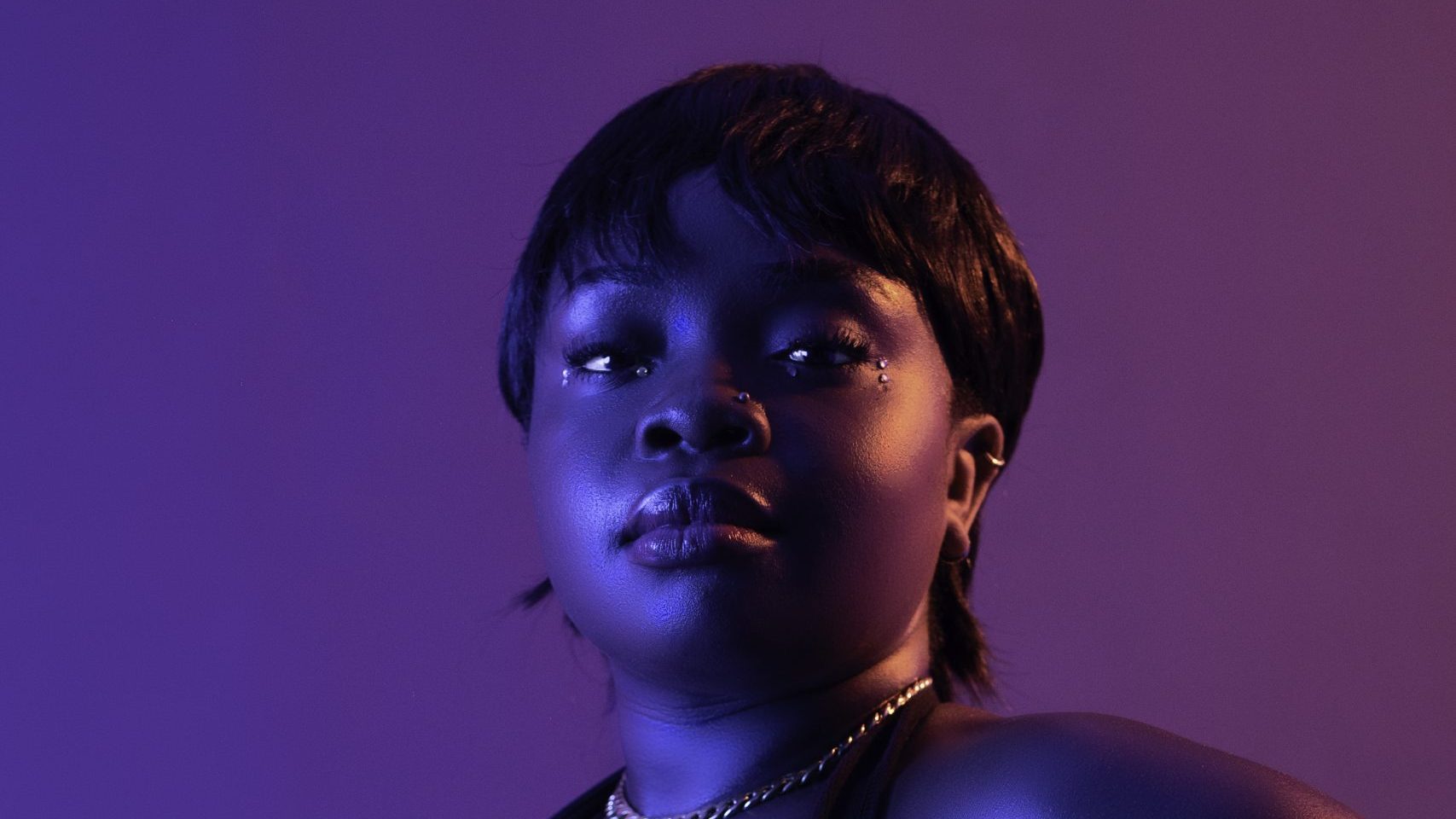
The Lagos music scene has a way of producing people who were never supposed to be in it. It is a scene built largely by people who arrived through side doors and stayed because the music gave them something they couldn’t find anywhere else. Ugochi Silas, who performs as Axara, is one of those people, and her story follows that familiar arc in all the best ways.
She started DJing in university, not as a career move but as a release valve, a way to stay close to music during the kind of years that make you need it most. Somewhere along the way, that release valve became something else entirely. Axara became a name, a sound, a presence that increasingly mattered.
Axara has carved out a lane that is distinctly her own. Her sound blends Afro-House, afrobeats, R&B, and hip-hop with the kind of fluency that comes from genuinely loving all of it, not from trying to cover every base. Guardian Music ran a feature on her titled “The Afro House Reign of Axara,” a headline that captures both where she is and where she is headed. Audio Girl Africa spotlighted her as the Afro-House DJ lighting up Lagos nightlife. She has played Insert Nights, Raveolution, Rehash, South Socials, Obi’s House, and Whiskey With The Girls, demonstrating the range of rooms she can hold and the range of crowds she can move.
Beyond performing, Axara sits at an intersection that very few people in the Lagos scene occupy simultaneously. She is the Community Manager for both CIIFA, the Creative Industries Initiative for Africa, and the Music Business Academy for Africa, one of the continent’s most respected music industry training programs, with alumni now working at companies like The Orchard and partnerships with Music Ally and New York University’s music business program. It is, as she puts it, not that far from DJing at all. Both sides of her work are about building something, about creating spaces where the right things can happen for the right people. Her signature event, Dance Dance Dance, is the most direct expression of what she believes a room should feel like: no pressure, no rules, just good music and people who came to actually dance.
This is Axara, in her own words.
Before we get into everything else, who is Ugochi and who is Axara, and is there actually a difference between the two?
There isn’t really a hard line between the two. Axara is how people experience me when I’m creating and DJing, while Ugochi is the version of me in my 9–5, building communities in a more corporate space.
Honestly, though, it’s all the same person, just showing up differently depending on the room. My friends would probably say the two names come with two different personalities, though.
Lagos has no shortage of DJs. What made you decide this was the space you wanted to occupy, and what did you see that made you think there was room for you specifically?
I actually started DJing back in university. At the time, it was just something I leaned into because I loved music and needed an escape from the stress of life.
But somewhere along the way, it became more than that. I started noticing how people connected on the dancefloor, how they fell in love with songs in real time and how the energy would just shift. I realised I really cared about putting people on to music and making people dance.
So even though Lagos has so many DJs, I wasn’t thinking about it as “is there space?” It just felt like something I was naturally drawn to. And since I saw the impact I could have, even in small ways, I haven’t really looked back.
Your sound spans House, Afrobeats, R&B, Hip Hop and more. When you’re building a set, what’s the thread that ties all of those genres together so it doesn’t feel like a playlist on shuffle?
Most times, there’s already a music policy for the gig, so that helps guide the direction. But when there isn’t, I like to play around a lot more and do unexpected sturvs.
I’m always thinking about energy, transitions, and what makes sense in the moment.
Fun fact: I love pairing vocals and instrumentals from completely different genres. When it works, it really works, and those are usually the moments people remember.
You’ve been described as a modern tastemaker. What does that actually mean to you, and do you think tastemaking is something you can be intentional about, or does it just happen?
That honestly means a lot to me, because I’m a huge fan of putting people on to new sounds.
To me, being a tastemaker is about curiosity and intention; not just playing what people already know, but introducing them to what they could love. I definitely think it’s something you have to be intentional about. It doesn’t just happen. You have to care enough to dig for great sounds and to take small risks with what you play. That’s how you build trust, and over time, people become more open to discovering music through you.
You’re a woman holding space in a DJ scene that is still largely male-dominated in Nigeria. How much does that reality sit with you when you’re behind the decks, and do you think the Lagos scene makes enough room for women or is the access more conditional than people like to admit?
To be very honest, I barely think about it when I’m behind the decks. I’m just happy to be there, doing what I love and creating my own magic at that moment.
Of course, I’m aware of the reality, but it doesn’t define my performance at all. I think what’s more exciting is seeing more women stepping into the space and owning it in their own way. It feels like something is shifting, and over time, the balance will naturally restore itself.
There’s definitely more room now, but if we’re being honest, access can still be a bit conditional. That said, things are shifting and more women are showing up, killing different stages, and taking up space in a way that can’t be ignored.
There’s an ongoing conversation about whether female DJs in Nigeria get booked for their talent or to fill a diversity quota. Have you ever felt that tension personally, and what have you had to learn the hard way about protecting yourself and your brand in this space?
Honestly, I always find that conversation interesting. Why are these conversations even happening?
For me, I just focus on doing the work and showing up fully in my sets. At the end of the day, if I’m booked, I’m there to deliver, and I do. But please, let’s keep booking female DJs sha, because there are so many incredibly talented women doing amazing things in the scene.
The industry can be quite transactional, so it’s important to know what you bring to the table and not be afraid to stand on it, whether that’s in conversations around bookings, expectations, or how you’re treated. Be a badass and don’t be afraid to show up and show out when you need to.
Dance Dance Dance is your signature pop-up event. What was the gap you were trying to fill when you created it, and what does a successful edition feel like to you?
Honestly, just like the name, all I need is for people to come and dance their feet awayyy!
I wanted to create a space for open-format events where there’s no pressure, no rules; just good music and pure fun. A successful edition for me is simple: the dancefloor is full, the music is great, and everyone is having a really good time.
You’ve played Insert Nights, Raveolution, Rehash, South Socials, Obi’s House, Whiskey With The Girls, etc. That’s a wide range of rooms and audiences. Which type of crowd challenges you the most and which one brings out the best in you?
Insert Nights, Rehash, and other themed events (especially the ones with less obvious or “unpopular” themes) definitely challenge me the most because they push me to really do my researchhh.
But honestly, EVERY gig brings out the best in me. Different rooms, different energy, and I always rise to it. If you’ve seen me play, you’d know it’s always up.
Beyond performing, you’re Community Manager for both CIIFA and the Music Business Academy for Africa. That’s a very different kind of work. What draws you to the infrastructure side of the industry, not just the performance side?
Honestly, it doesn’t feel that far off because I’m still very much in music but just on the administrative side of it.
I’ve always been curious about the backend and really understanding how the business works beyond DJing. Getting the opportunity to step into that space and be part of organisations like CIIFA and the Creative Business Academy for Africa, especially ones that are actively impacting the industry, felt like a natural step for me.
Guardian Music did a feature on you titled “The Afro House Reign of Axara.” Do you feel like you’re reigning yet, or does that feel like a title you’re still growing into?
Shout out to the Guardian Music and Chinonso Ihekire for that feature.
I don’t think I’m “reigning” just yet, there’s more to come. But I’m also not going to downplay the work I’ve put in and the spaces I’ve been able to step into.
So maybe it’s something I’m growing into, but I’m definitely on my way.
Be honest: what’s the most chaotic or embarrassing thing that has ever happened during a set that the crowd had absolutely no idea about?
This one was more chaotic than embarrassing.There have been times where the crowd gets so lit, and the stage gets so packed that, because I’m petite, I’m basically getting pushed off my own set. I’ve had to lowkey fight my way back just to transition into the next song 😭
Meanwhile the crowd has no idea, they’re just vibing.
If you could only play one genre for the rest of your life, what would it be and why?
House Music in all shapes and forms. I’m just in love with it.
What does a bad night at the decks look like for you, and how do you recover from it both in the moment and afterwards?
A bad night for me is usually when there are issues with the gear; the speakers or the decks. Those things can really affect the flow of a set.
In the moment, I always adjust and make it work because the show still has to go on. But ideally, I prefer everything to be as close to flawless as possible so I can focus fully on the music and the crowd.
The music industry in Nigeria can be very transactional, especially for women. What have you had to learn the hard way about protecting yourself and your brand in this space?
It’s important to know what you bring to the table and not be afraid to stand on it, whether that’s in conversations around bookings, expectations, or how you’re treated.
Be a badass and don’t be afraid to show up and show out when you need to.
Five years from now, what does Axara look like, and what does success feel like for her beyond the bookings and the flyers?
Five years from now, I see Axara really deep in the music scene. I’ll have tracks out, I’ll be producing my own sound, and most likely running a record/gear store.
I also want to be hosting one of the best community events, something that really brings people together around music and just feels good to be part of.
Leave a Reply