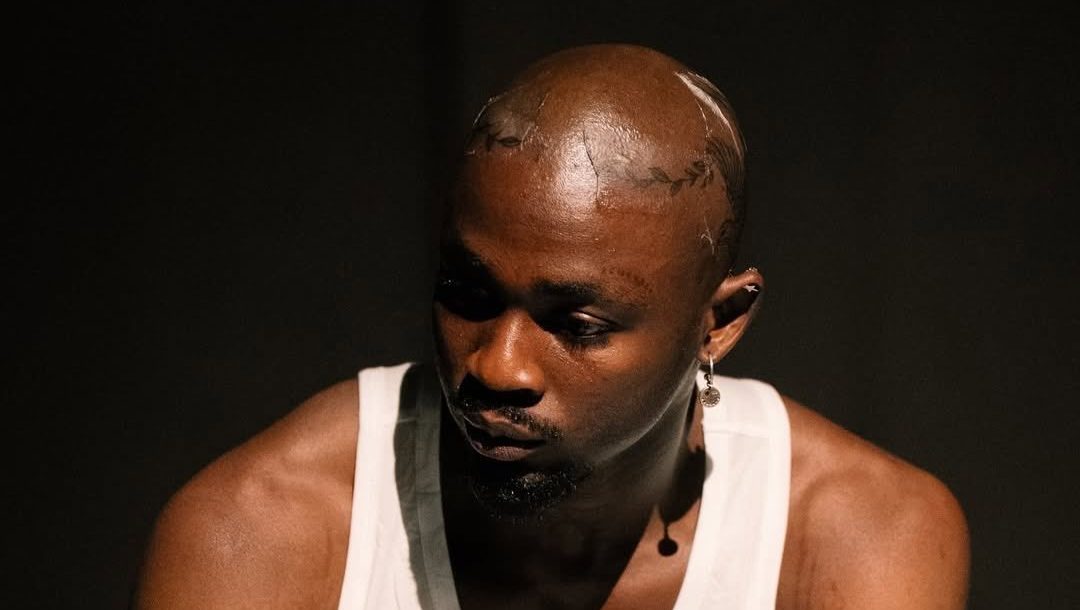
On March 10th, at the listening party for his upcoming album Clarity of Mind, Omah Lay made the following comment: “Afrobeats is mainly Lagos. It is mainly Yorubas. Fela Kuti is the pioneer, we all know that, and he is Yoruba. I am from Port Harcourt, and you have to break into Lagos. There are only two people from PH that you know: Burna Boy and me.” The internet, predictably, caught fire. Most of the ongoing conversation right now is debating whether it’s appropriate to call Fela the pioneer of Afrobeats (with the s), or whether that statement is reductionist to the efforts of contemporary artists like 2Baba, D’Banj and P-Square. But there’s a second conversation worth having carefully because while Omah Lay isn’t wrong, he isn’t entirely right either, and the gap between those two things is where something important lives.
Before we go any further, Omah Lay has an album dropping. The man is no stranger to the art of the stunt; he knows how to keep his name in the air when he wants to. So, it’s worth taking his intent with a grain of salt; his comments might actually be a genuine concern over an existing issue, or simply blowing smoke because he knows we’ll give him free press (and it’s clearly working).
Let’s start with what’s true. Lagos is Nigeria’s major commercial stronghold, its cultural engine. But when it comes to the music industry, “major” starts to look a lot like “monopoly”. It’s the unofficial headquarters: labels, studios, A&Rs, playlist curators, event promoters, media giants, the whole ecosystem, it’s concentrated in one city. That’s not really unusual globally; New York and Los Angeles do the same thing to American music, and London to British music. What makes the Nigerian situation distinctive, though, is the degree to which Lagos seems to gatekeep, not just anchor, the industry. For artists from other regions, Lagos isn’t just where the work is. It’s where you MUST go to be legitimised.
The clearest evidence is biographical, and it cuts across every region of the country. Burna Boy grew up in Port Harcourt, started making music there, and only found mainstream success after relocating to Lagos. Omah Lay followed the same path. Rema, from Benin City, went viral online but still needed a Lagos-connected label to formalise his career. And then there’s the North, historically the most shut out of all. The Choc City Jos Boys: MI Abaga, Ice Prince, and Jesse Jagz, represent arguably the height of what northern artists have achieved in the Nigerian mainstream, and even then, as MI himself has admitted, they carried far more southern DNA in their sound than northern identity at their commercial peak. They had to pay the piper to succeed. More recently, artists like Firstklaz are making waves, but breaking through to the national mainstream remains a different challenge entirely.
The pattern is consistent enough to be a system: talent exists everywhere, but the infrastructure that converts talent into a career is almost entirely Lagos-based. An artist can be popping in Enugu, Aba, Kano, or Maiduguri, have fans across multiple states, sell out local shows, run a loyal online following, and still be casually referred to as an “eastern artist” or a “northern act,” thus segregated as a regional act rather than a national one. That qualifier doesn’t disappear until Lagos cosigns you.
This is a structural issue, not a cultural conspiracy. But it has a cultural consequence: when the industry is based in Lagos, and Lagos has a home advantage, it follows that artists who are culturally proximate to Lagos, be it geographically, linguistically, or socially, will find the climb less steep. The Yoruba language dominates in hit music not necessarily because Yoruba is in itself superior for music, but because the tastemakers, producers, and audiences who most directly shape what “blows” are concentrated in a Yoruba-majority city. The language winning is a symptom, not the disease. As with everything else in Nigeria, the ethnic and religious dimensions make the stakes considerably higher.
Which brings us to the timing issue, and this is where Omah Lay’s comment gets complicated. Nigeria is not navigating this conversation from a neutral place right now. Since the lead-up to the 2023 elections, deep tribal wounds have been gouged, and they aren’t even close to being healed. Against that backdrop, “Afrobeats is mainly Yoruba” doesn’t land as the industry observation we assume it to be; it lands as a tribal grenade. Even if the intent is a structural critique, the framing feeds a fire that’s already burning.
If this is not at all what he meant, and he really just wants to sell records, that’s fine. People have done and said much worse things in pursuit of the same effect, so we can just roll our eyes and move on. No harm, no foul.
Was Omah Lay attention-seeking? Was he just speaking from personal exhaustion, the grind of an outsider who had to work twice as hard to earn a seat at a table that should have been open to him from the start? The latter is a legitimate grievance. Regardless of his intention, he has sparked important discourse. So, the problem shouldn’t be that he said it. The problem is that Nigeria, right now, doesn’t have enough structural trust built up to hear it as anything other than an accusation. And that’s not on Omah Lay. That’s on the industry, and on the country, to fix.
Leave a Reply