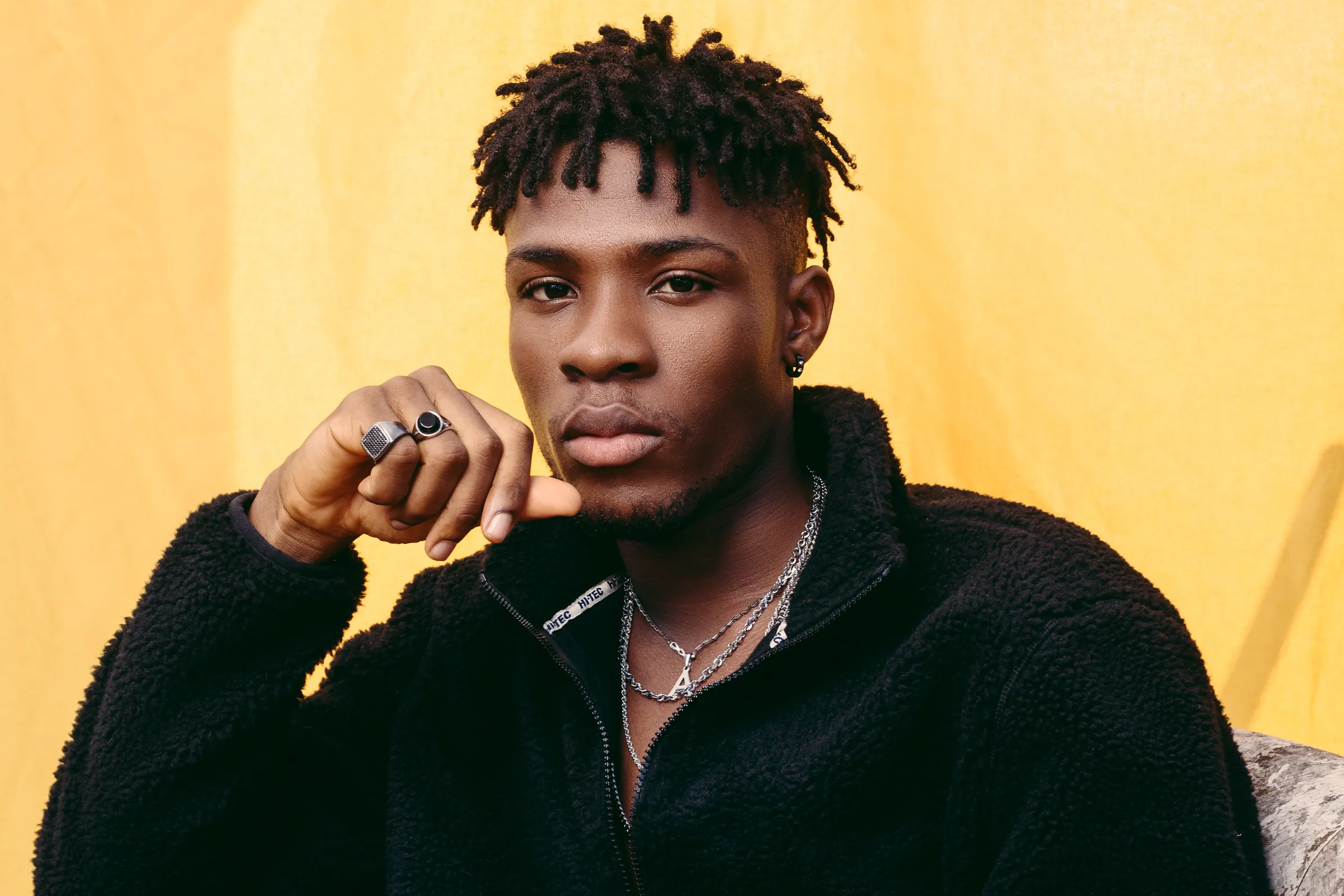
Today, everyone knows Joeboy. Songs charting on three continents and over 2 billion streams. But before March 2019, he was just a young boy in Lagos with no job, no plan, nothing but instinct and a prayer. Somewhere between that moment and this one, he made a song called Baby. And then, Baby made him.
“Baby was my breakthrough.” Those were the words Joeboy gave when we asked him how the song impacted his life. “I knew it would be big, but not this big.” That is the thing about Baby that separates it from the standard origin story. Most artists, when looking back at their breakthrough, claim hindsight certainty, saying things like “of course it was going to work, I always knew”. Joeboy’s version is more interesting than that. He is not claiming he saw it all coming. He is saying he recorded it, stepped out of the booth, and knew something had just happened. He just didn’t know how much of something.
Seven years later, Baby has almost 47K Spotify streams, a visualiser with 31 million YouTube views and an official video that pushes the combined total to nearly 45 million. It earned him Best Artiste in African Pop at the 2019 All Africa Music Awards. It launched a career that would go on to include “Alcohol”, his first Spotify song to cross 100 million streams, making him the 17th Afrobeats artist to reach that milestone; “Nobody,” which inspired over 10 million fan-created videos in a viral dance challenge; and a feature on CKay’s “Love Nwantiti” remix that gave Afrobeats one of its most globally streamed records of the early 2020s. It also made a Grammy winner of an unknown student producer in Awka. But to understand what Baby did, you have to understand what it arrived into.
Lagos, early 2019: A young man has just finished his final exams at the University of Lagos, where he studied Human Resource Management, and is experiencing the all-too-familiar uncertainty that follows the end of formal education. “I was at a crossroads,” Joeboy says. “I was broke, staying positive, and trying to figure out what next.” The future ahead of him had a default shape: get a degree, get a job, basically join the machinery of normal life. It was the sensible path. It was also, to him, unthinkable. “I genuinely just knew I didn’t want to do a 9-5 job.” So, he did what many people do when the logical options feel insufficient. He reached for the supernatural. “I literally asked God for a breakthrough. And then, I wrote the song during that period.”
Whether you read that as faith, intuition, or the particular creative clarity that comes from having nothing to lose, the result was the same: he sat down, and Baby came out. The song was written around Bariga and recorded in just 45 minutes. It tells the story, borrowed from a friend’s real-life experience, of a man drawn to a woman whose pride, as the song frames it, is both the problem and the appeal. It is a feeling anyone who has ever wanted someone slightly out of reach will recognise immediately.
The most incredible thing about this song was that it was born from a string of happy coincidences, a cascade of not-supposed-to-happen events. First, he didn’t have a beat. “I sent the song to my producer friend, BeatsbyKO, asking him for a beat, but he didn’t have one at the time. Instead, he referred me to someone else, and the rest, they say, is history.” That “someone else” turned out to be a relatively unknown mathematics and statistics student at Nnamdi Azikiwe University in Awka, known as Deratheboy or Dëra. Interestingly, the beat had been passed over by another artist and was just “floating” until it found Joeboy.
Even after it was recorded, Baby was not supposed to be Joeboy’s next release. He had actually been set to drop a collab with a Ghanaian artist, but the fates had other plans. “I sent Baby to Mr Eazi on WhatsApp, and after listening, he asked if Sarz produced it; that was how undeniable the song was.” Mr Eazi was his most significant connection in the industry at the time. The relationship between the two stretched back to 2017, when Joeboy had posted a cover of Ed Sheeran’s “Shape of You” on Instagram and sent it to several artists’ DMs. Mr Eazi watched it and reached out. That single DM became the foundation for everything. In 2018, Eazi launched emPawa100, a programme to fund and mentor emerging African talent. Of 10,000 applicants across 14 countries, Joeboy was selected. He used his grant to shoot the video for his debut song, “Fààjí”, and, within a month, was given an additional investment. So, when he said he wanted to scrap his planned release in favour of Baby, Mr Eazi & emPawa gave the green light.
The song was ready, with a plan to release it alongside a proper video. (Un)Fortunately, there was a visa hiccup, so the video shoot had to be pushed and a decision was made to have a simpler visualiser instead, a few days after the audio went out. Joeboy had never spoken to Poka, the person who made it. That visualiser went on to accumulate 31 million views. Joeboy himself has said it remains more relatable than the official video that eventually came, calling it “that hard to beat.”
Baby dropped on March 1, 2019, and two lives were never the same. It accumulated 20 million streams across YouTube and Spotify before the year was out. For Joeboy, the AFRIMA nomination came, quickly followed by the All Africa Music Awards win. His debut EP, Love & Light, announced a genuine new voice in Afropop. The following year brought “Nobody” with Mr Eazi, a viral phenomenon with over 10 million fan-made videos, and Headies nominations. His debut album, Somewhere Between Beauty & Magic, arrived in 2021. The sophomore, Body & Soul, in 2023. In February 2024, he launched Young Legend Records and released “Osadebe,” signalling a new chapter of creative ownership. By 2025, his catalogue had crossed 2 billion streams. “Alcohol” made him the 17th Afrobeats artist to break 100 million Spotify streams on a single record. The career that started with a prayer had become, by any measure, an answered one.
For Dera as well, Baby was its own kind of miracle. He said in an interview, “It was Joeboy’s Baby that did this for me. Artists who wanted to work with me would take care of my flights; the thrill that I dreamt of was starting to come to life.” From that floating beat, he went on to co-produce two tracks on Burna Boy’s Grammy award-winning Twice as Tall and received his own Grammy nomination for work with Bad Bunny, and now has credits alongside some of the biggest artists on the planet.
The word Joeboy uses, more than once, when he talks about Baby, is undeniable. He uses it to describe what Eazi heard on that WhatsApp message, what Poka somehow captured without a brief, what the streaming numbers confirmed before the year was even out. “It’s undeniably a classic,” he says, seven years on. “And till today I’m still amazed by the record. It remains one of my favourite songs ever.” There is something quietly extraordinary about that. Most artists grow past their early work, or at least develop complicated feelings about it. Joeboy still loves Baby the way you love something that arrived at exactly the right moment and did exactly what it was supposed to do.
When asked what he would tell the version of himself that made the song all those years ago, his answer is not about the numbers or the awards or the career. It is simpler than that. “Believe in yourself. Believe in where you are, keep creating and don’t play small. Just trust the process.”
Leave a Reply