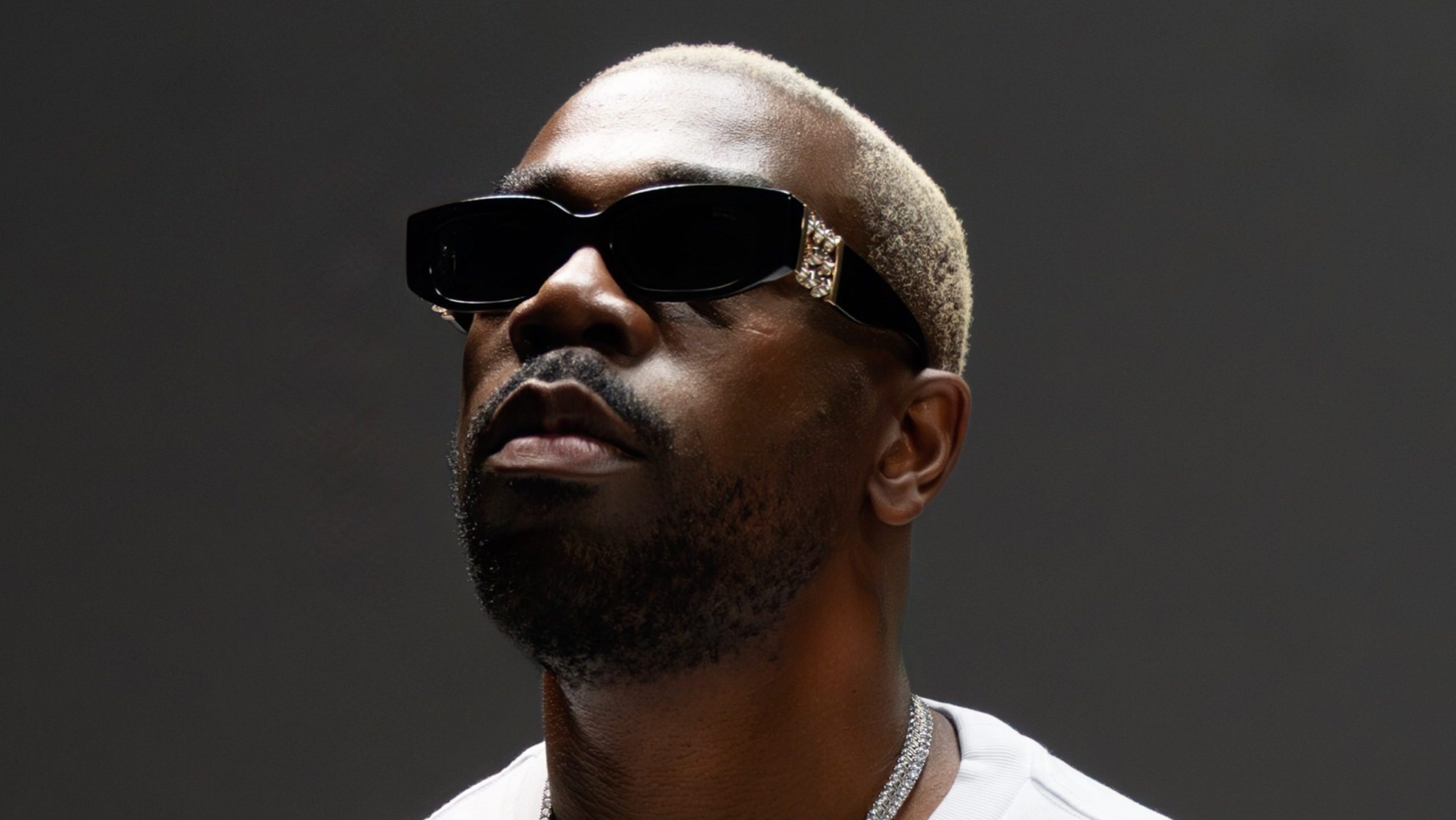
Some artists spend their whole careers chasing a sound. James BKS, born in France and formed in part by an America that promised belonging, spent years building that sound for other people first. As a producer who made placements for superstars like Snoop Dogg, Akon, Ja Rule, and Idris Elba, he learned the industry from the inside, absorbing its generosity and its cruelty in equal measure. It was only when he reconnected with his previously unknown biological father, Cameroonian music legend Manu Dibango, that something shifted. The sound he had been searching for turned out to be waiting in the music of where he came from.
In this interview, James walks us through the journey of his life (which could easily be a movie). He shares his views on identity and craft; the lessons the industry doesn’t teach you until it’s too late, the wolf mythology that anchors his artistic vision, and the making of a song born from a documentary. Threaded through it all is a quiet but firm philosophy: that true artistry is never about copying what you love, but about understanding it deeply enough to make it yours.
For those who are unfamiliar with you, who would you say you are in your own words?
I’d say I’m an eternal student. I was blessed to be able to create and make a living out of it, doing music, working with a lot of big artists like Snoop, Akon, Ja Rule, and a bit later on, Idris Elba, and so on. I was a producer, I’m still a producer obviously, but after that, I really realised that I wanted to tell my own story. I felt like I had a voice and I had something to tell. So I started focusing on my signature sound and became an artist.
You grew up in France, but your career really started when you moved to the US, and you reconnected with your Cameroonian roots as an adult after meeting your father, Manu Dibango. At what point in that entire trajectory would you say you truly found your sound?
I was fortunate to make a living on my own when it comes to music because I started music kind of late in my life, around my 20s. When I started making placements and having my foot in the game, a few years later, that’s when I reconnected with him. I was proud to be able to actually do it on my own. But once we actually reunited, once I got to hang out with him, once I got to have him tell me the stories of his life, the people that he met, what he meant to the world — that changed my perception of music completely. I was almost 30, and I really wanted to leave something behind, musically. I grew up listening to all the big producers like Pharrell Williams, Kanye West, Swizz Beatz, and Timbaland. They were great at what they were doing, but most of all, they had their own sound, and they were not trying to copy each other. Once I grew a bit older and got more experienced in the game, I really wanted to have that signature. I wanted people to, when they hear my records, know exactly who is behind them. When I reconnected with my dad, I was fortunate to meet his musicians and got introduced to a lot of new rhythms and new music genres that I didn’t know. I was overwhelmed by that, and I was able to infuse what I knew from music and my experience with the music they made me hear. That changed my perception of music completely.
At what point did you move to the US? How old were you?
I was 19.
So you fully grew up in France?
Yes. I was born and raised in France, but I used to go to the US a lot on vacation because I had siblings there, cousins, uncles, and aunts. During vacations, I would go over the summer. The American dream, the people that we saw on TV that looked like us were from the US. So growing up in the neighbourhoods of Paris, you wanted to be like them. When I had the opportunity to go with my parents, we moved as a family. They were pursuing the American dream as well. That changed my way of seeing things, and I was able to start music there.
Regarding your parents, how did it happen that you reconnected with your father as an adult? Did you always know he was your father?
I knew I had a biological father, obviously, because I grew up with my mom, who’s from Cameroon. But both of my fathers — my stepfather and the one who raised me — were white. So obviously, I knew I had a biological father, but it was kind of a family secret for a long time. Once she saw that I would pursue music as a career and take it seriously, that’s when she actually told me the truth. I remember that day: I was in her basement, we were living in Virginia in the US, and I was making beats, truly proud of what I was doing. She came down, and I was like, “Yo, you should hear what I’m working on. I’m really feeling that composition.” She kind of smiled, and that’s when she told me the truth. That’s something I rejected at first, because not knowing what happened between those two made me kind of insecure, not knowing why he didn’t raise me, why he wasn’t part of my life. So I was like, “Okay, now I know who he is. Thank you for telling me, but I don’t want to hear nothing about it anymore.” I kind of grew like that, wanting to succeed musically with my own name.
But when I moved back to France around 2010, I’d just come off a bad contract with Universal in the US. I’d already made a few placements and was making a living, but I wanted to start over, be in control of my rights, and educate myself about the music business. I decided to move back to France, and I started having meetings with publishers, managers, and the likes. I had this meeting with a publisher at a hotel restaurant in Paris, and my dad also had an interview at the same place.
Wow.
And I was like, what is going on? Does the publisher know the link between him and I? Because it was truly a secret. My father had an interview, then the publisher rushed in and said, “I’m sorry, I’m doing a lot of things right now, I’m releasing an album for my artist, and I want you to meet him. He’s actually a music legend.” He didn’t know! He wanted me to work on the album remix they were working on. So we met briefly, but my father had another interview, and we spoke for maybe 5 minutes. He didn’t recognise me because I had my cap on and I pulled it low over my face. But that sparked something in me. When I went back home, I called my mom and said, “You’ll never guess who I just met.” She said, “Wow, that’s destiny.” And I was like, “Okay, so what am I supposed to do now?” I had a lot of questions suddenly that I didn’t even know were in me. She said, “You cannot run from your destiny. We should meet him. We never clashed or anything, but he was married and had kids, so I decided to raise you on my own.” She said, “Go ahead and introduce yourself.”
It took me another 6 months because I didn’t want them to think I was pursuing him for the wrong reasons. I really wanted to do this naturally. When it finally happened, that changed our lives. We realised we had a lot in common. I was actually the only one of his kids who was making music. We started a real relationship and hung out for 7 or 8 years before he passed. I was able to truly hear his stories through him, and I met wonderful people. I guess that sparked something in me.
Going back to the moment where your mother finally told you who he was, did it kind of make sense to you, like, “Oh, this is why I have music in me”?
I guess so. I was playing by ear, never took any classes, it was a hobby. But people around me in the US were like, “You’re good. What type of equipment do you have? How do you work?” And I was like, “I’m just making this on my PlayStation.” They were like, “You should take that seriously. You have something in you.” It was when I reconnected with him that I understood where it came from, obviously.
You said you’d been working in his circles for about 6 months before you told him who you were. How did that conversation finally go?
I went through a lot to be able to meet him in the best way possible. I was hanging out with his publisher and we started working together, but eventually things didn’t go well between them, and his contract was finishing. The publisher never ended up making that introduction happen. I was fortunate to meet people close to my dad through that publisher, and I told them my secret. It took a while: at first they didn’t know where I was coming from, why it took that many years for me to show up. They were suspicious. Then they realised what I was doing was genuine and natural.
When we finally met, it was at one of his best friends’ places. We talked about how I grew up, what made me realise I wanted to make music, everything I was doing in the industry, and why I went back to France. He said, “That’s beautiful.” At the end of that meeting, he said, “I’m on tour right now, but give me a few weeks, and I will introduce you to the whole family.” Later, I realised that only a few people close to him even knew he had another son.
You spent years producing for other artists like Snoop, Akon, Puffy, Ja Rule, basically helping other people build their fame. Now that you’re centred in your own work, what did you come in knowing about the predatory side of the industry that other artists discover too late?
Being able to be creative is as important as being able to understand the ecosystem you put yourself into. The music business is a business — we tend to forget that. We start making music as a hobby, and it’s cool being creative and surrounded by talented people. But if you don’t have lawyers, if you don’t have people managing you right, that can become hell. You’ve got to know what a publisher is supposed to do for you. You’ve got to be able to read your own contracts, have your own lawyer, start making a living, and see further than just having one hit or meeting your number one idol. You’ve got to take it seriously as a profession.
You’d already mentioned starting over after coming off a bad contract, so I thought you’d have something to say about that.
That was naive. I can’t point fingers at other people, that would be immature. We have our own responsibility to educate ourselves and know what it takes to make a living in the industry. When you want longevity, you’ve got to control your business. I made bad choices back then, but I learned from them. I’m actually truly grateful for that situation, because if I didn’t have it, I would have never found myself or been able to have my own production company and the people working with me right now. Being independent is really hard, but it’s being able to be free.
Many of the people you’ve worked with, we only see their legendary side, like Snoop Dogg is SNOOP DOGG. Q-Tip is Q-TIP. As somebody who’s worked with them behind the scenes, who would you say was the most surprisingly funny in the studio?
I had only two sessions with Akon. The production company I belonged to back then was under Konvict Music, so we were able to use their studios and have that Konvict aura, which opened doors for us. In the first session, Akon didn’t even see me. He was doing his own thing, and I was truly impressed by the way he worked. In the second session, I was working with Rock City, amazing songwriters from the Virgin Islands who wrote for Rihanna, Justin Bieber, a lot of big artists. They were signed through Akon.
Out of nowhere, Akon came into the studio and they started an argument. They were doing their thing as songwriters, but wanted to be artists themselves and had projects they really wanted to release, and Akon blocked everything. They had a debate that took literally hours. I learned so much about the music business that day. From the outside, they seemed truly successful with access to everything, but it wasn’t the case, they were stuck in a contract. Akon was cracking jokes, but being like, “Trust me, it’s not the right time to release your music yet.” But they were arguing. I was like, why don’t they just release their own music? And that’s the thing, it’s not as easy as that. They were stuck. I saw a different face of Akon that day, but he knew what he was doing.
You describe yourself as someone whose music has no homeland. Would you look at that as a source of freedom or as a source of loneliness as an artist?
A little bit of both. When it comes to the algorithm, I would definitely say loneliness. Whenever I have meetings with my distributors, they’ve never been able to put my music in one box. That’s a struggle when you want to reach a large audience, because these days it’s all about playlists on Spotify and Apple Music. If you’re not responding to a genre box, you don’t get those playlists. But when it comes to the public, when I get to have concerts and see people face to face, they love what I’m doing, they love my music. There’s no better feeling than that because it’s real. I present my music to them directly, and when I see the response, it cannot lie. It’s a struggle. It gets hard. But I know why I’m doing this.
Something that came up a lot is the imagery you use of wolves; your debut albums are both called Wolves of Africa. And I realised I said you described yourself as SOMEONE whose music has no homeland, but what you actually said was you’re a wolf who has no homeland. Where did that stem from?
When you think about wolves, you usually think about Europe, right? Not knowing that there’s actually a rare kind of wolf called the golden wolf that comes from Africa. When I heard that, I was like, that describes me perfectly. I’m kind of a loner, but I know I’ve never done anything I’m doing right now without the pack I have, my family. Coming from both sides, growing up in France but reconnecting with my roots, that felt like the best symbolic figure to describe me and my sound. There’s this metaphor of the wolf and the moon. When the moon shines, that’s when the wolf howls. To me that represents reconnecting with my roots. The moon being Africa and me being the wolf, it’s like okay, I get that call now. It’s time to build bridges and make things happen.
There’s a tagline you’ve used, “we’re the new breed and we really don’t care.” That’s a bold statement. Who exactly is the new breed? Is it a generation, a diaspora, a state of mind?
Yes, all of that. WE are the new breed. And actually, you are too. What we’re doing is building bridges. We’ve come from a generation that is still learning but has learned from those who paved the way – our parents, the music figures that came before us. We’re trying to pay homage to them while carrying the torch and learning from their mistakes as well. It means being aware of the industry we’re in, educating ourselves, being able to control the art we’re doing, connecting cultures, connecting people from the diaspora. We’re not the ones who designed the African map, but we’re the ones able to rewrite the story. That’s what new breed means to me.
Let’s speak about “Milli Vanity.” You wrote it after watching the 2023 documentary about Milli Vanilli, and then you actually met one of them, Fab. What changed between the song you wrote before meeting him and how you understood the story after spending time with him?
I had my perspective when I saw the documentary. I was blown away by his story, his side of it, because we didn’t know how the story ended, right? He was stripped away from what really happened. They published the book without him. When I saw the documentary, I saw how the music business works, and how when you’re naive and young, you tend to make the wrong connections or the wrong choices. That’s what happened with him.
When I actually met him, I was blown away, because it’s one thing to make your mistakes behind the scenes: to be shameful, to fall, to have people pointing fingers at you within your ecosystem. It’s easy. But when you do that in front of the entire world, and you’re still able to rise again and redefine how people see you — that takes guts. When I spoke with him, he took every responsibility. He owned his mistakes. He said, “I was part of the problem too. But I grew from that. I didn’t want my story to define me like that, so I had to take responsibility and show the world I’m a true talent. I can sing, I can dance, I can make music. Let me start over.” To me, that’s the meaning of life. We’re not perfect. We’re human beings. We make mistakes. We fall. But the best way to rise again is to own it and show yourself as you are.
Fab actually starred in your video. Did you have an “I can’t believe this is happening” starstruck moment on set?
Definitely. I was really young when they first came out and got big, probably around eight. They had their own style. They were truly ahead of their time when it comes to style and hairdressing. When I got to actually meet him and see him vibing to the record, I saw him put his bandana on and I was like, wow. That made me go back to my childhood, trying to have hairstyles like they had. My mom was a hairdresser. It was fully on the Milli Vanilli style and I was like, yeah, that’s cool.
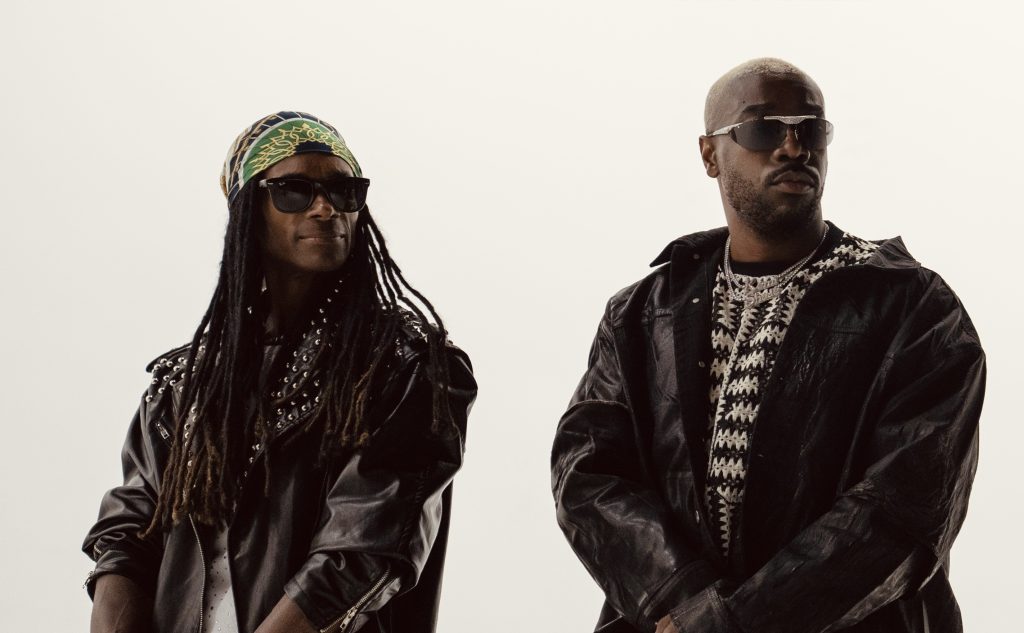
You co-directed the video with Giovanni Scott, who has also worked with Lil Baby and Memphis Depay. During the process, what was the most creatively stubborn thing you refused to budge on?
The pile of money. I really wanted to make that happen and technically it was kind of hard. The shoot lasted a long time and it took a while to put it together. But I really wanted it because to me that’s the whole point of the video, it’s all about perspectives. How you see that pile of money, what it means to you, to your life and what you’re going through. I fought for that hard and we made it happen.
You referenced the money scene from The Dark Knight but deliberately did not recreate it. For you, what is the difference between paying homage in visual storytelling and straight-up theft?
The difference is truly being a fan of the craft. When you love something, you’re not trying to copy it, you’re trying to understand it, study it, embody it, and infuse it into who you are. John Mayer said something like that a few years back. He said that if you truly love an artist and respect them, you’ll never try to copy them, but you’ll try to understand what they went through when they did that record you love. You’ll study it hard and then embody it and express it coming from who you are. That’s my definition. Truly being in love with the craft.
Let’s speak about your EP “See Us Rise”. You blended West African sounds with hip-hop and Amapiano. In the past four or five years, Amapiano specifically has become very commercially saturated. How do you use it without being swallowed by it?
Amapiano comes from a culture. Amapiano comes from South Africa. That’s their way of living, who they are. I’m not going to try to copy that because that’s not where I come from. But I’m in love with the sound they created. So I’m going to try to understand it, see what I like about it, and infuse that in my music. I would never copy it directly because it wouldn’t be me. And the people doing it are always going to do it better than me. So what’s the point? If you want an Amapiano beat, you’re going to talk to the great producers from South Africa. That’s my state of mind.
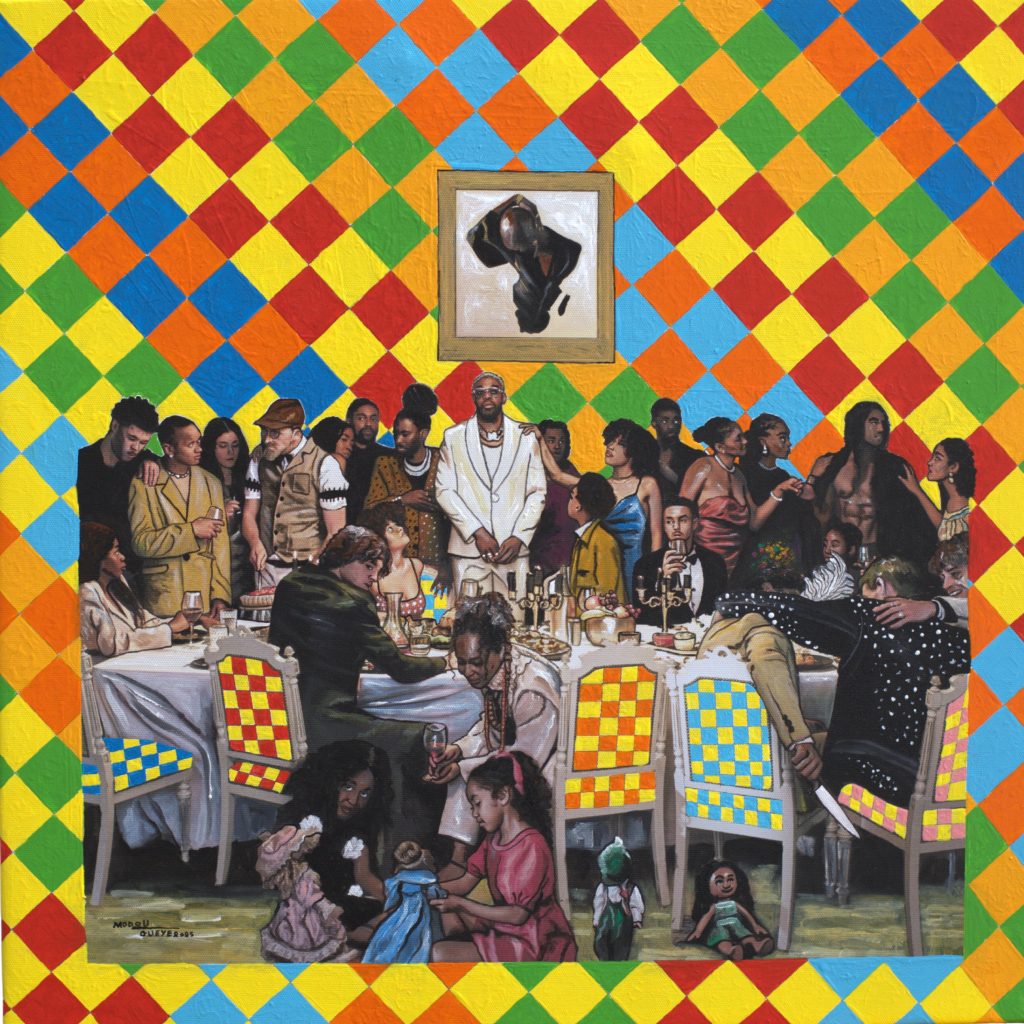
You’ve had sync placements ranging from FIFA 23 to Netflix shows to Google Africa campaigns. What are your feelings on sync licensing? Some people would say it’s a compromise, selling out. Do you see it that way?
It’s neither of those things. It’s me being able to create and share my music with the world. When I do it, I don’t compromise it. They use it because they love what I put on the table. That’s me connecting with a larger audience, connecting with people who would not necessarily get to know me or understand my music otherwise. I think it’s a blessing. It’s truly a blessing.
You’ve had placements in FIFA 23, NBA 2K 21, and MLB Nine Innings. Have you ever actually played any of those games? And while playing, were you low-key listening out to hear your track?
Funny enough, I was really into video games when I was younger, but I kind of leave that to my son now. I never got the opportunity to hear my music while playing those games, but I played those games when I was young. So it feels special just to have the opportunity to be part of the NBA 2K family, the FIFA family. It’s a blessing. But no, I never got that chance.
In 2022 you performed more than 40 dates across Europe, Rwanda, Italy, and beyond. What was the most chaotic or absurd thing that happened on that tour?
There was one moment I’ll always remember. It was the second or third date, a huge festival in Lyon, in the stadium. The lineup was crazy: CKay, Stromae, PNL, Orelsan, Black Eyed Peas. It was during the time I made that record with Will.i.am. I’d never met him in person; we made everything through the internet. It was going to be our first time meeting and I was truly excited. I thought, if he’s here, maybe we’ll perform the record together.
We started with the very first record and the whole system shut down. My computer shut down. I couldn’t play the parts I had on the keyboard. I was so disappointed, it was truly, truly hot over the summer and that affected my computer, I didn’t know what to do. My musicians saw that I was stuck and they took over. Thankfully I have wonderful musicians who didn’t even need the parts I would play. They played live basically. That gave me confidence after that, there’s what you have in mind, and then there’s reality. It never happens like you plan, but that’s what live music is all about. We ended up doing that show and the public, even my own team, were like, “That was amazing.” And I was like, “Do you know that the tracks I was playing shut down?” They said, “But you did it. You went all the way.” That’s the defining moment for me.
Did you eventually get to perform with Will.i.am?
We didn’t perform because he arrived late at night, but we got to hang together. And I saw him back at another festival. I was with Idris actually, and Idris performed with me that day.
Atlanta, Paris, and Douala all hold meaning for you. Which has the best food? The best nightlife? And where would you want to grow old?
Ah, I’m going to have enemies if I answer this. Paris for the food, there’s so much variety. Nightlife, even though I’m not really a party guy, I’d say Atlanta. That’s where I met all those great producers, songwriters, and artists. It was mostly between studio and parties. Atlanta for the nightlife. And where I’d grow old, none of those places. I want to explore Africa more. I was fortunate to go to Ghana for a songwriting camp in Accra, a wonderful city. I fell in love with Jo’burg when I went to South Africa. I didn’t visit Nigeria yet, I’d love to. And Kenya as well. I want to explore before I decide where I want to spend my old days.
What would you say is the most embarrassing song that you genuinely love?
There’s not one in particular, but if you heard my playlist you’d be surprised. I listen to a lot of old music, like themes from old series like Starsky & Hutch. A lot of movie soundtracks.
We know that wolves travel in packs. Who would you say are the people in your life right now that you’d consider your pack?
My direct family. My two sons, my wife, my parents. My dad who passed away always told me, you’re going to meet a lot of people. People will enter your life, they will go. You only have one family, and the people that truly love you for who you are, they’re not more than the five fingers you have in your hand. So cherish them. Cherish them.
On your song “Kwele”, you used a sample from one of your father’s tracks from 1990, a song recorded several years before you ever met him or had a relationship with him. What does it feel like to build something with a man using materials he left behind before he even knew you?
That was a blessing. When I first produced that record using the sample, it was back in 2013, probably 5 years before I released it as an artist. Back then I didn’t fully know what I was doing, but I heard the record and I was like, this is crazy. The choir is amazing. It sounds new but timeless at the same time. Being able to sample it and create a whole new song was wonderful. But then once he heard it, he said, “I can play something to it.” And he laid his saxophone on it. That was full circle for me. We were able to do a few other records together, but that one is truly special, it was the very first one.
You’ve performed at Lollapalooza, sold out venues, collaborated with Q-Tip, Idris Elba, Little Simz, Carlos Santana, and a lot of others. By most people’s metrics, you’ve made it in the industry. So what does “Milli Vanity”‘s warning about the cost of illusion mean to you personally and practically?
To the world, making it means having a Grammy or working with such and such. But to me, I’m an old soul. Being able to be free in life, creating every day, having my sons around me, traveling with them, having that love around me constantly, that’s success. That’s truly success. Then obviously we’re humans, we’re controlled by material things, and it’s a constant struggle. I’m a very competitive person, so I always want higher goals each year. I want to fight and go up and up. But when I go back to my place and I see my sons growing, there’s nothing better than that. It’s genuine, it’s true, it’s pure. And to me, it’s success.
If you had to soundtrack your own life as a film, which three songs that aren’t your own would make the trailer?
Either Human Nature or Earth Song by Michael, either one. Through the Wire by Kanye is another one. And the Batman soundtrack would be my last choice.
Leave a Reply