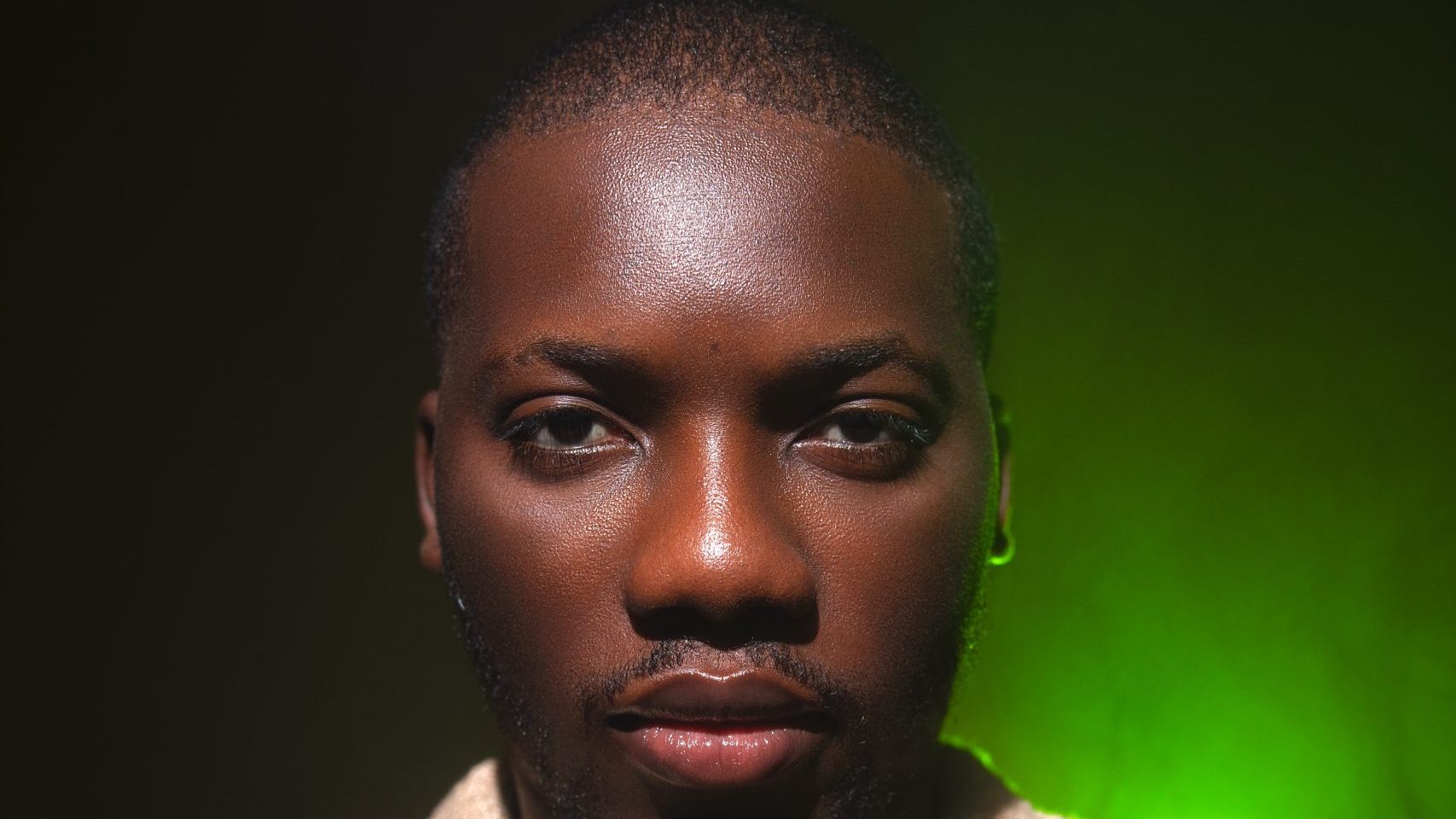
PROTON grew up on his father’s favourites like Ebenezer Obey, Sunny Ade, and Fela Kuti, legends who became the bedrock of every beat he created. Now, drawing inspiration from Dlala Thukzin’s versatile palette and Caiiro’s hypnotic sets, he transforms those foundations into Afrohouse that moves bodies. His latest single, “Green Crack”, is gaining traction across festivals and events, earning him recognition in the Afrohouse community and introducing his sound to wider audiences. Aside from making music, PROTON is also influential in Lagos’ event space as co-founder of Monochroma, one of the standout raves in the scene.
We caught up with PROTON to talk about birthing an identity from a chemistry class, Moscow mules, the challenges of being an introverted performer, and why music that makes you feel something is all that matters.
You’re called PROTON. What’s the origin story of the name? Are you a physics nerd?
Hehe. I consider myself to be a nerd; I don’t think my nerdiness is specific to any particular subject. However, my friends have pointed out that I do nerd about time travel a lot. The name Proton came up back in high school when I completed a Chemistry assignment none of my classmates did.
You grew up on Ebenezer Obey, Sunny Ade, and Fela Kuti through your father. The jump from traditional Yoruba music and Afrobeat to Afrohouse and AfroTech is significant. How do you translate the polyrhythmic complexity and spiritual energy of those legends into your Afrohouse productions? Was there a specific moment or track that made you realise you could bridge those worlds?
I see music as a universal language. Especially when it comes to alternative music. I grew up listening to Ebenezer Obey, but started moving to alternative artists like Maroon 5, Coldplay, Beatenberg, before eventually finding house. What stands out about these artists is that they aren’t limited by the sound; instead, they see the sound as a tool, and that is how I see these worlds.
You cite Dlala Thukzin’s versatility and Caiiro’s hypnotic sets as inspirations. What specific elements from each have you studied or adapted, and how do you balance emulation with innovation?
I consider those two as inspirations because I believe they do not make music in the traditional sense. Like, they try to make music in a way that’s different. I know everyone goes crazy when the Dlala Thukzin tag drops, but for me, I’m crazy even before it drops because they have a way of making music that moves me. And that’s what I’m about, music that can be tied to something (an emotion, a moment, a person, a feeling). That to me is the reason I make music.
What’s the weirdest place you’ve found inspiration for a track? And has anything completely random ever ended up as a sample in your music?
Has anything completely random ever ended up as a sample in my music? That’d be my voice. Most of my friends would be shocked that I actually used my voice because I am very insecure about it; however, my next song with Sigag Lauren has a lot of my chants in there.
As for the weirdest place I’ve found inspiration for a track, does the fact that I took music production seriously because I had a crush on someone who sings count?
Definitely. You’re described as meticulous in your sound design. What does your typical production process look like?
I make music that I’d listen to if I were a listener. I think this idea makes me very conscious of my decisions and sometimes makes me feel like a perfectionist, also.
AfroTech and Afrohouse can range from deep and hypnotic to absolutely explosive. How do you decide which direction to take a track during production?
It’s all about the emotion I want to evoke. That usually drives the direction.
I also think about the location/event audience. For example, I co-founded two raves, Monochroma and Deep Haus, and it’d be weird to play deep dark afrotech songs at Deep Haus (which is an event focused on Deep House music).
If you could describe your sound as a food/drink, what would you choose?
Moscow Mule (a cocktail).
If you could only play one song for the rest of your life to get any crowd moving, what would it be and why? (Can’t be your own track.)
Hoya (by Vanco & Tunde International).
What’s your pre-set ritual? Are you the calm and meditative type, or do you need to be hyped up before hitting the decks?
I don’t have one. Maybe telling myself that I’ve got this.
Most DJs have horror stories. What’s your worst technical failure mid-set, and how did you recover?
Hmm, finding out that one of the decks I was using to play wasn’t working and having to play 15 minutes of a set with just one deck.
What’s the most challenging aspect of blending deep house grooves with African rhythms while keeping tracks dance floor-ready?
I’d say finding the right songs/energy that complement each other.
Tell me about “Lost in the World.” What drove you to create a platform documenting sets from different cities, and how does location influence what you play?
I’m a bit of a nomad—I usually travel at least twice/thrice in a year.
How do you read a crowd and decide whether to take them deeper or push the energy higher? What’s the best dance floor reaction you’ve witnessed to one of your tracks?
Reading the crowd involves me studying what the DJ before me plays, and also the time of day. Sometimes during my set, I play some songs and also see how they react. That’s how I’m able to figure out what they like.
Best dance floor reaction has to be whenever I play my edit of Ashimapeyin—most people never expect it to slap like that.
Playing in different cities worldwide, what have you learned about how Afrohouse translates across cultures and continents?
Music is universal.
As co-founder of Monochroma, what gap were you trying to fill in Lagos nightlife when you started, and how has the rave evolved?
Monochroma wants to make you feel good. It’s about making people believe and embrace the extraordinary, lol. It started as a house-party type party where (Blak) Dave and I would invite folks to come party with us.
What are the unique challenges of building an electronic music community in Lagos? Is it infrastructure, audience education, or something else entirely?
You’d be surprised how hard it is to get a venue for parties.
Also, I think the community is growing and still figuring itself out as more people join and discover the beauty of the community.
If you could throw a Monochroma edition anywhere in the world with an unlimited budget, where would it be and what would make it unforgettable?
Probably Lagos. With an unlimited budget, we can show the world what it’s like to party with us lol.
Lagos has Afrobeats, Alté, and numerous other genres. How does Afrohouse fit into that ecosystem, and is there cross-pollination happening?
Afrohouse is an alternative genre, and alternative music is about embracing the world and making it cooler.
You’re described as redefining Afrohouse. What does that mean to you practically, and where do you see the genre going in the next 3-5 years?
I see it going places. It’s definitely gonna evolve as time goes on and we’d have more sub-genres and so on.
What’s next after “Green Crack”? EP, album, specific collaborations? What are you building toward?
Working on a collaborative project. I also have another song with Sigag Lauren, which we are dropping in a couple of weeks.
You’re juggling production, international DJing, and running events. What’s the thing you’re struggling with most right now that people might not see from the outside? And where do you think you might be wrong about your own trajectory or the scene’s direction?
What I’ve struggled with is being an introvert who has to face crowds. I think people are always shocked to find out I’m actually introverted and not so social.
What’s currently playing on repeat in your personal playlist that has nothing to do with Afrohouse or electronic music?
Green Crack. Funny how I’m realising that song is actually sweeter than I thought, even though I made it.
You get to curate a dream festival lineup: living or dead, any genre. Who are your three headliners and why?
Fela (just for funsies), Shima, Angelique Kidjo, and Black Coffee.
What’s the ultimate dream for PROTON?
This is a tough one. I’d say the ultimate dream is to make music I’m proud of, and I’ll always be proud of.
Leave a Reply