There’s a moment in every artist’s journey that doesn’t always announce itself. The songs are moving, the listeners are coming back, and the sound is starting to travel not just within one city or country, but across borders. It’s no longer about being discovered. It’s about momentum.
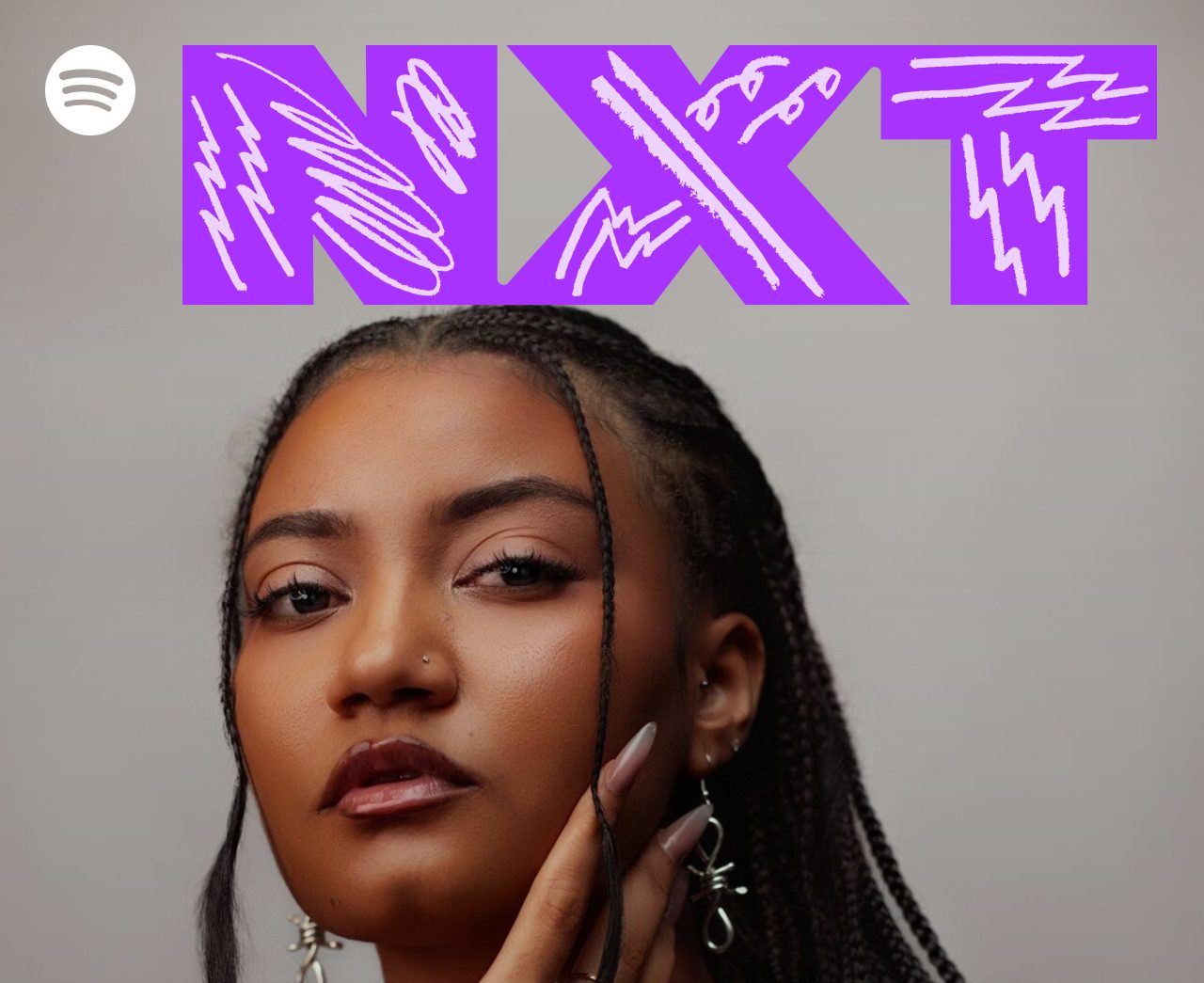
Spotify’s NXT playlist exists to capture that exact moment. Sitting between Fresh Finds and RADAR Africa, the NXT playlist spotlights artists who have moved beyond early buzz and are actively stepping into their growth era. This year’s cohort, NXT – Ones to Watch 2026, serves as a dedicated anchor for music discovery, featuring 50 emerging artists curated with an emphasis on zero-track representation to allow for a broader, more inclusive context.
The NXT – Ones to Watch 2026 tells a clear story about African music today: breakout no longer follows a single path. Instead, sounds move sideways before they move up, carried by listeners who discover, share, and return. To capture this shift, the artists selection is informed by a blend of editorial judgment and performance data, measuring year-on-year streaming growth, repeat listening, and geographic expansion, with ten breakout artists from Nigeria, Ghana, East Africa, and South Africa specifically spotlighted to tell the deeper story of the region’s evolving sounds.
In Nigeria, that momentum is easy to hear. Shoday’s Afrobeats records have grown by 228% year on year, with listeners spreading from home into the US, UK, South Africa, and Ghana. Hit songs like Paparazzi and Shoday Kilode draw people in, while deeper cuts reveal an artist building range and staying power. Zaylevelten’s rise looks different but no less telling. With almost 22,000% year-on-year increase, his Alte and Hip-Hop sound has found an audience that stretches from Nigeria to the UK, US, Ghana, and Canada proof that underground music can scale when listeners feel seen by it. A few of his fans’ favourites are tracks like Idanski, Wuse Tu and Guide pass.
Across Ghana, growth is equally pronounced. Mellissa’s Afropop and R&B records have recorded a 140% increase, resonating with audiences across Nigeria, Ghana and the UK, US and Canada through her star track Goodboy (Kweku) showing mood-driven storytelling rather than spectacle. Jubed’s Afrobeats sound has surged by 300%, with Ruwa acting as an entry point, while sustained listening across Ghana, Nigeria, the US, and the UK signals that the connection runs deeper than a single hit.
In Kenya, the data points to a renewed appetite for Hip-Hop and Afro R&B. Toxic Lyrikali’s 1,493% growth marks one of the most notable rises on the list, his most viral hit Backbender spreading beyond Kenya into Tanzania, Nigeria, the UK, and the US. Zaituni’s records move more quietly, but no less intentionally, finding listeners across Kenya, the US, Tanzania, the UK and Denmark through her magnetic tracks Tamu and Tick Tock, signalling steady cross border resonance.
South Africa’s NXT playlist artists underline how alternative sounds are travelling further than ever. Babble Hume’s growth, exceeding 15,000% year on year, reflects global interest in genre-blurring African music, with listeners emerging from South Africa, to the US, Canada, the UK and Australia. Nanette’s rise is steadier but consistent, with a 125% year-on-year growth connecting audiences across Southern and East Africa while expanding into Nigeria and the US.
Christian and Gospel is another space where listeners across Sub Saharan Africa are showing up with intention, using Spotify as a steady anchor for faith-led discovery. This shift is reflected in the data showing artists like K3ndrick, whose Afro-gospel sound is quietly gaining momentum across Nigeria, the US, and Canada through tracks like Guide Me and Calvary. Sal Ly brings a softer, Christian R&B approach, carrying messages of hope and reflection to listeners in Brazil, the US, the UK, and Canada with songs such as Blessings and Chemical Hearts.
Taken together, The NXT – Ones to Watch 2026 reveals a shift in how African music grows. Listeners are discovering artists earlier, staying longer, and carrying sounds across regions through everyday listening. Growth feels real when it’s repeated, shared, and sustained, not when it arrives fully formed.
“What we’re seeing across Africa is that growth doesn’t happen overnight, it builds. Listeners are discovering artists early, returning to them, and carrying their music across borders in very real ways. The NXT playlist exists to recognise that moment of momentum, when an artist is no longer emerging on potential, but on connection,” says Phiona Okumu, Spotify’s Head of Music for Sub-Saharan Africa.
Spotify’s role isn’t to predict the future of African music, but to reflect what listeners are already doing. By spotlighting artists at this in-between stage, the platform acknowledges the work happening before the headlines, when careers are being built one listen at a time.
The next wave isn’t coming. It’s already moving.
Leave a Reply